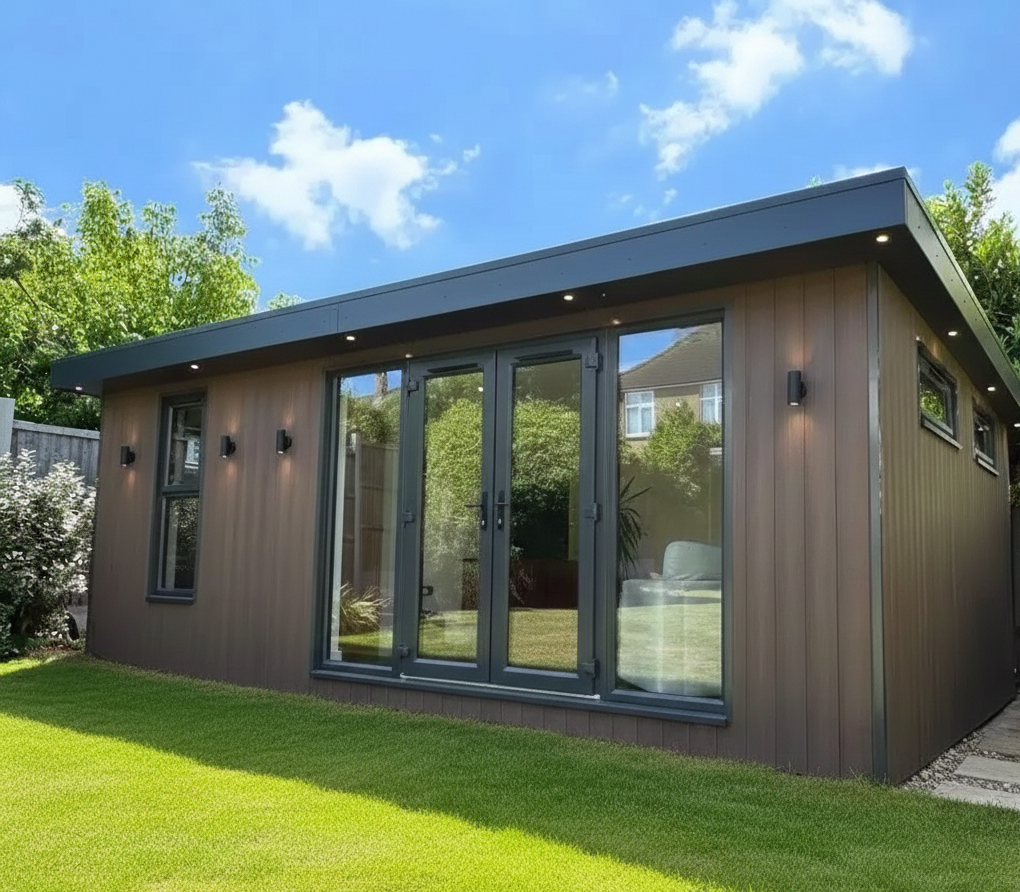
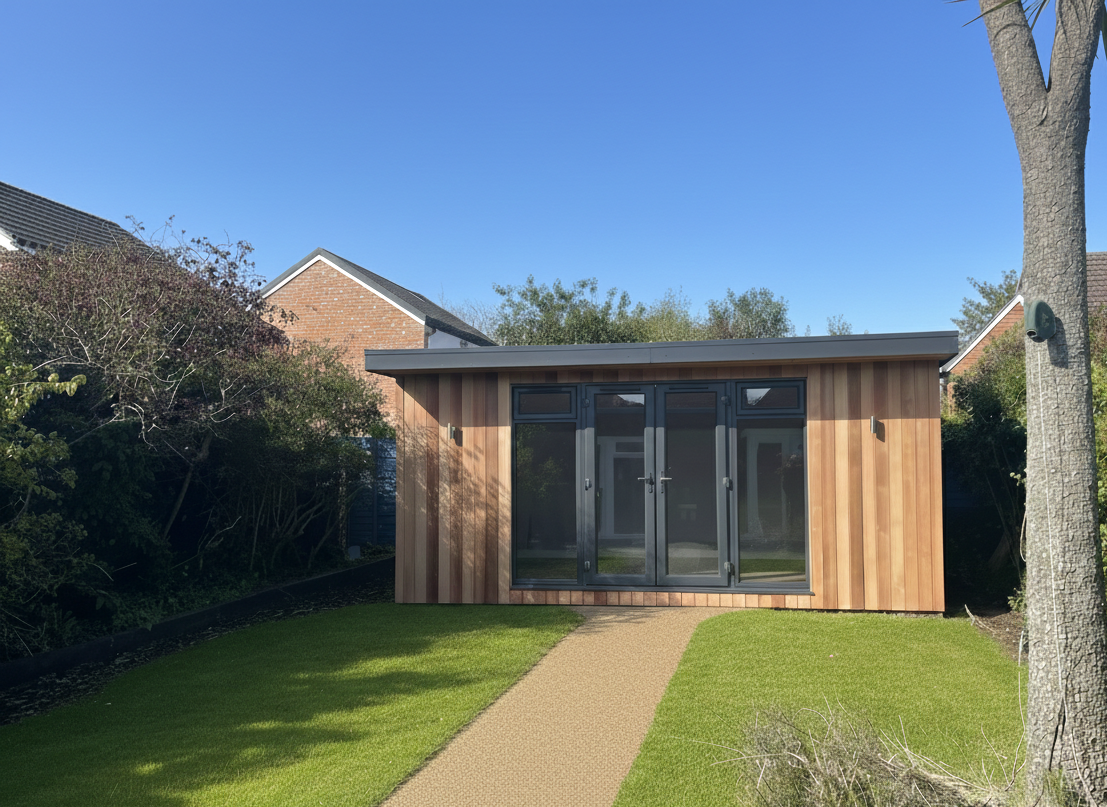
One of the most common concerns potential garden room owners have is whether their new space will be comfortable throughout Britain’s notoriously unpredictable weather. The idea of a beautiful summer retreat is appealing, but what about those damp February mornings or sweltering July afternoons? The good news is that with thoughtful design and specification, garden rooms can provide exceptional comfort in all seasons, rivalling or even exceeding the comfort levels of your main house.
Creating a truly all-weather garden room requires careful consideration of insulation, heating, cooling, ventilation, and moisture control. Let’s explore how each element contributes to year-round comfort and what you should specify to ensure your garden room remains your favourite space regardless of the weather outside.
The Foundation of Comfort: Superior Insulation
Understanding Thermal Performance
The key to all-year comfort begins with exceptional thermal performance. Modern garden rooms should achieve U-values (thermal transmittance measurements) that match or exceed current building regulations. This means specifying insulation that keeps warmth in during winter whilst preventing unwanted heat gain during summer.
Quality garden rooms typically feature multi-layer insulation systems. The floor should include rigid foam insulation boards beneath the structural deck, preventing cold bridging from the ground. Wall insulation often combines rigid boards with mineral wool batts, creating a continuous thermal barrier that eliminates cold spots.
Roof Insulation Strategies
The roof presents particular challenges, as heat naturally rises and escapes through poorly insulated roof structures. High-performance garden rooms feature either warm roof construction (insulation above the structural deck) or hybrid systems combining rigid insulation boards with breathable membranes and reflective barriers.
Warm roof systems are particularly effective as they keep the entire roof structure at internal temperatures, preventing condensation issues whilst maximising thermal performance. The investment in superior roof insulation pays dividends in both comfort and running costs throughout the year.
Addressing Thermal Bridging
Thermal bridging occurs when conductive materials create paths for heat transfer through the building envelope. Quality garden room construction addresses this through careful detailing, using thermal breaks and continuous insulation layers. This attention to detail prevents cold spots that can cause discomfort and condensation problems.
Windows and Glazing: Balancing Light and Performance
Double and Triple Glazing Options
The glazing specification significantly impacts year-round comfort. While single glazing might suffice for summer houses, all-weather garden rooms require double glazing as a minimum, with triple glazing increasingly popular for premium comfort.
Modern glazing systems incorporate low-emissivity coatings and argon-filled cavities to maximise thermal performance whilst maintaining excellent light transmission. The result is windows that keep heat in during winter whilst reflecting solar heat during summer.
Strategic Window Placement
Window positioning affects both comfort and energy efficiency. South-facing windows maximise winter solar gain, providing free heating during colder months. However, the same windows can cause overheating in summer without appropriate solar control measures.
East and west-facing windows require particular consideration, as they can create uncomfortable glare and heat gain during morning and evening hours. Thoughtful design incorporates external shading, overhangs, or high-performance glazing to manage these challenges.
Bi-fold Doors and Ventilation
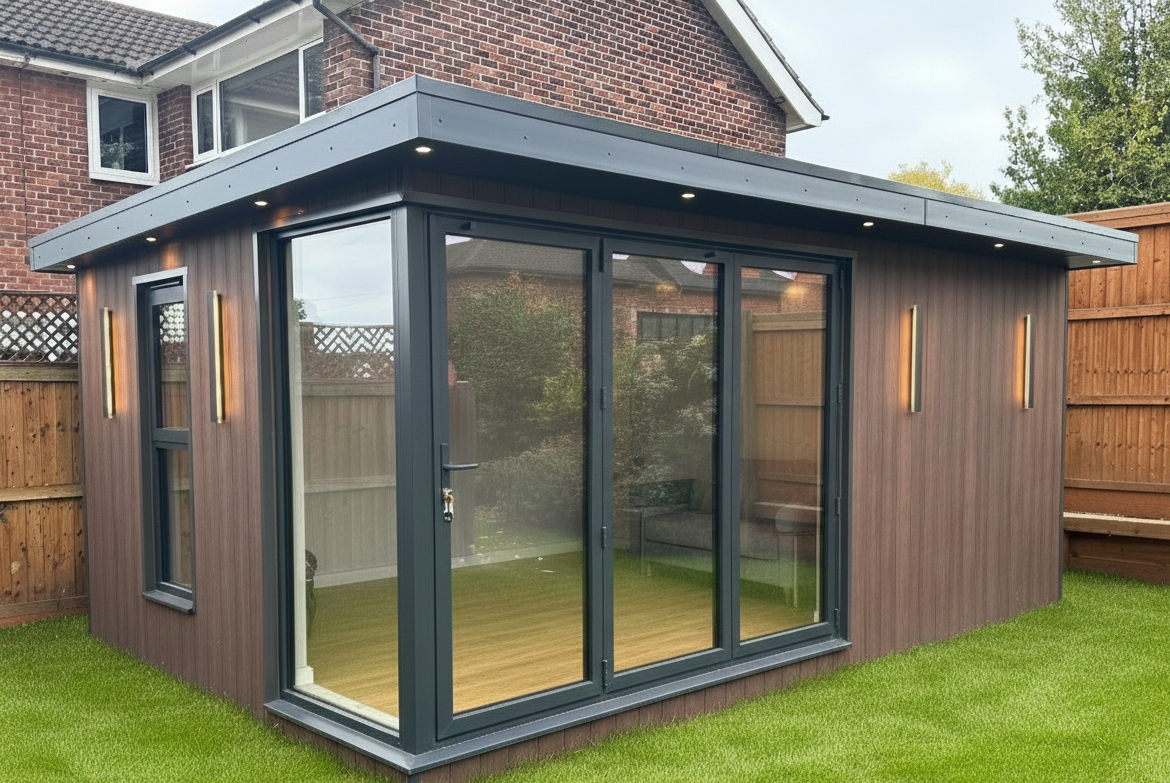
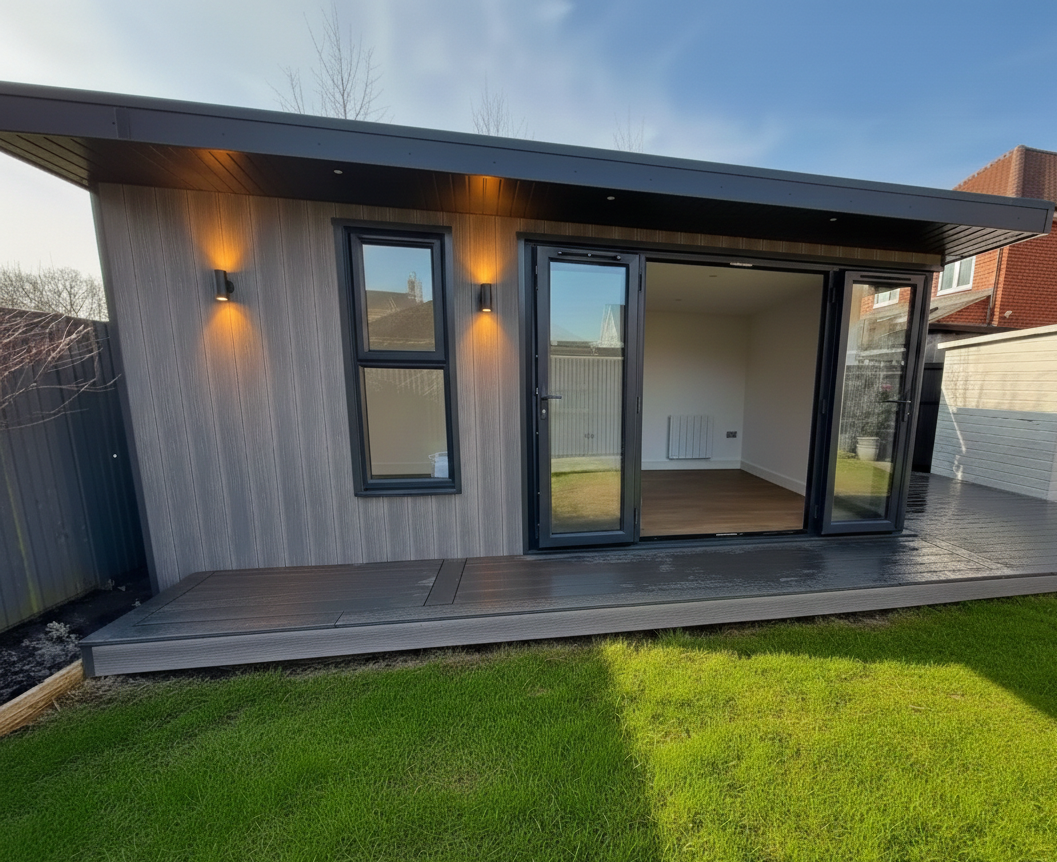
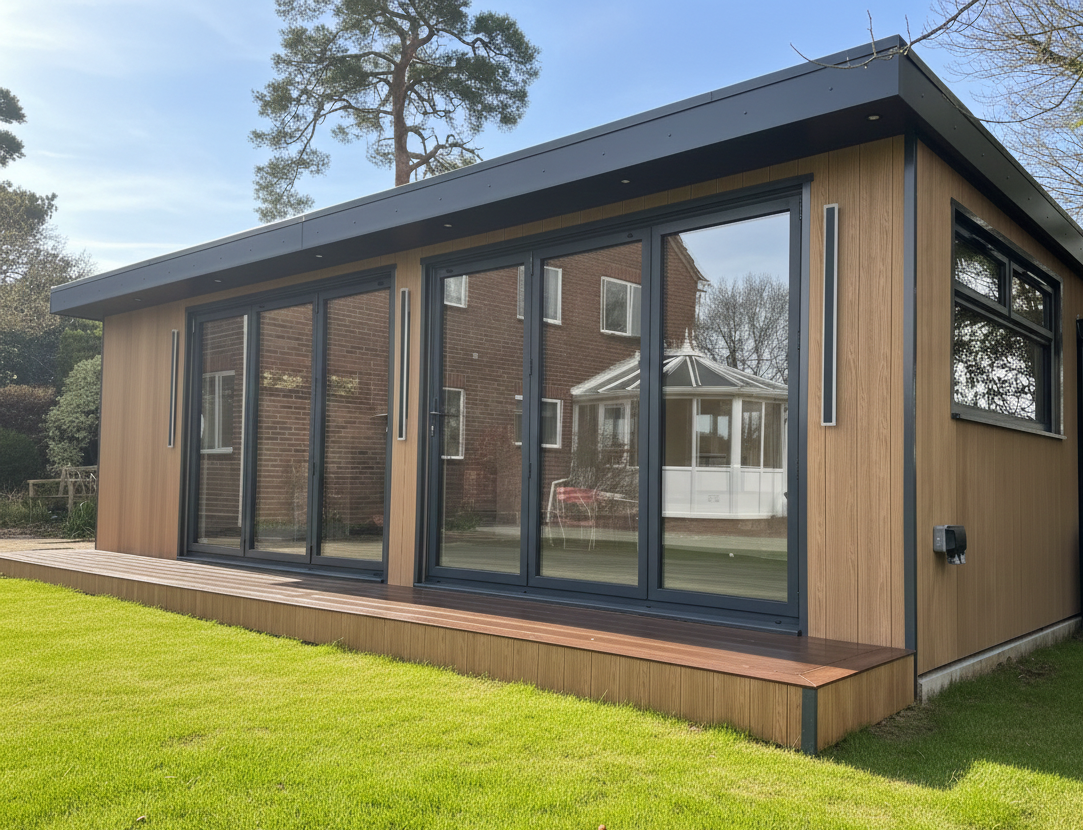
Large bi-fold doors are popular features that create seamless indoor-outdoor connections during warm weather. However, they must be specified with appropriate thermal performance for winter use. Quality bi-fold doors feature multi-point locking systems, weather seals, and thermal breaks to maintain comfort when closed.
Heating Solutions for Winter Warmth
Electric Heating Systems
Electric heating is often the most practical choice for garden rooms, offering precise control and easy installation. Modern electric systems include panel heaters, underfloor heating, and heat pumps, each with distinct advantages.
Panel heaters provide quick response times and zone control, allowing you to heat specific areas as needed. They’re particularly effective in spaces with good insulation, where rapid warm-up is desired.
Underfloor heating creates exceptional comfort by warming surfaces rather than just air. The gentle, even heat distribution eliminates cold spots and reduces air circulation, creating a particularly pleasant environment for activities like yoga or reading.
Air Source Heat Pumps
For larger garden rooms or those used intensively, air source heat pumps offer excellent efficiency and year-round climate control. Modern heat pump systems provide both heating and cooling, making them ideal for maintaining comfortable temperatures throughout all seasons.
Heat pumps work most efficiently in well-insulated buildings, making the investment in superior building fabric doubly worthwhile. They’re particularly cost-effective for garden rooms used regularly rather than occasionally.
Supplementary Heating Options
Wood-burning stoves create wonderful ambience whilst providing effective heating. However, they require proper flue systems, clearances from combustible materials, and regular maintenance. They’re best suited to larger garden rooms where installation requirements can be properly accommodated.
Cooling and Summer Comfort
Natural Ventilation Strategies
Effective natural ventilation is crucial for summer comfort. Cross-ventilation, achieved through strategically placed openings on opposite sides of the building, creates cooling airflow that can dramatically reduce internal temperatures.
High-level ventilation openings allow hot air to escape whilst drawing cooler air through lower openings. This stack effect ventilation works passively, requiring no energy input whilst maintaining comfortable conditions.
Mechanical Ventilation
In tightly sealed, highly insulated garden rooms, mechanical ventilation ensures adequate air quality whilst maintaining thermal performance. Modern mechanical ventilation systems can include heat recovery, capturing warmth from outgoing air to pre-heat incoming fresh air.
These systems are particularly valuable in garden rooms used for activities that generate moisture or require consistent air quality, such as home gyms or artist studios.
Solar Control Measures
Managing solar heat gain prevents uncomfortable temperature spikes during sunny weather. External shading devices such as awnings, pergolas, or carefully designed overhangs block solar radiation before it enters the building.
Internal blinds or films can help but are less effective than external measures, as they allow solar energy to enter the building before attempting to control it. The most effective approach combines appropriate glazing specification with external shading strategies.
Moisture Control and Ventilation
Understanding Condensation Risks
Garden rooms can be prone to condensation if not properly designed, particularly given their typically high levels of glazing and potential temperature differentials. Effective moisture control combines appropriate ventilation with thermal performance to maintain internal conditions within comfortable parameters.
Continuous Background Ventilation
Even during winter, garden rooms need continuous background ventilation to maintain air quality and prevent moisture buildup. This can be achieved through trickle vents in windows, passive ventilation systems, or low-level mechanical ventilation.
The key is providing adequate air changes without creating draughts or compromising thermal comfort. Modern ventilation systems achieve this balance through careful design and appropriate controls.
Vapour Control Strategies
The building envelope should include vapour control layers on the warm side of insulation systems, preventing moisture-laden internal air from penetrating into the building structure where it could condense and cause problems.
However, these systems must allow some moisture transmission to prevent trapping any moisture that does penetrate the system. Getting this balance right requires careful specification and professional installation.
Smart Climate Control Systems
Programmable Thermostats
Modern programmable thermostats allow precise control over heating systems, ensuring comfort when spaces are occupied whilst minimising energy consumption during unoccupied periods. Smart thermostats can learn usage patterns and optimise heating schedules automatically.
Remote control capabilities mean you can pre-heat your garden room before arriving, ensuring immediate comfort without wasting energy heating unoccupied spaces.
Integrated Systems
Sophisticated garden rooms can feature integrated climate control systems that manage heating, cooling, and ventilation automatically. These systems monitor internal and external conditions, adjusting various parameters to maintain optimal comfort whilst minimising energy consumption.
Future-Proofing Your Investment
Adaptable Systems
Climate control needs may change over time as usage patterns evolve or as climate change affects external conditions. Designing systems with capacity for future modification ensures your garden room remains comfortable throughout its lifespan.
This might include over-sizing electrical supplies to accommodate future air conditioning, designing ducting routes for potential mechanical ventilation systems, or ensuring structural capacity for future equipment installations.
Energy Efficiency Considerations
With rising energy costs and environmental concerns, designing for maximum efficiency makes both financial and environmental sense. This includes specifying high-performance building fabric, efficient systems, and renewable energy integration where appropriate.
Solar panels can offset energy consumption, particularly effective given garden rooms’ typically simple roof shapes and orientations. Battery storage systems can store solar energy for use during peak demand periods.
Professional Design and Installation
Creating truly comfortable all-weather garden rooms requires expertise in building physics, system design, and installation techniques. Working with experienced professionals ensures all elements work together effectively whilst avoiding common pitfalls that can compromise performance.
Quality installers understand how different systems interact and can identify potential issues before they become problems. They can also advise on maintenance requirements and operational best practices to ensure long-term performance.
The Comfort Investment
Designing garden rooms for all-year comfort requires higher initial investment compared to basic summer-only structures. However, this investment pays dividends through increased usability, lower running costs, and enhanced property value.
A comfortable garden room becomes a genuine extension of your living space rather than a seasonal add-on, providing year-round utility that justifies the additional specification costs. The result is a space you’ll want to use regardless of the weather outside, maximising the value of your investment.
With thoughtful design and appropriate specification, your garden room can provide a comfortable retreat that rivals the best rooms in your house, offering a peaceful sanctuary that remains inviting throughout Britain’s changing seasons.