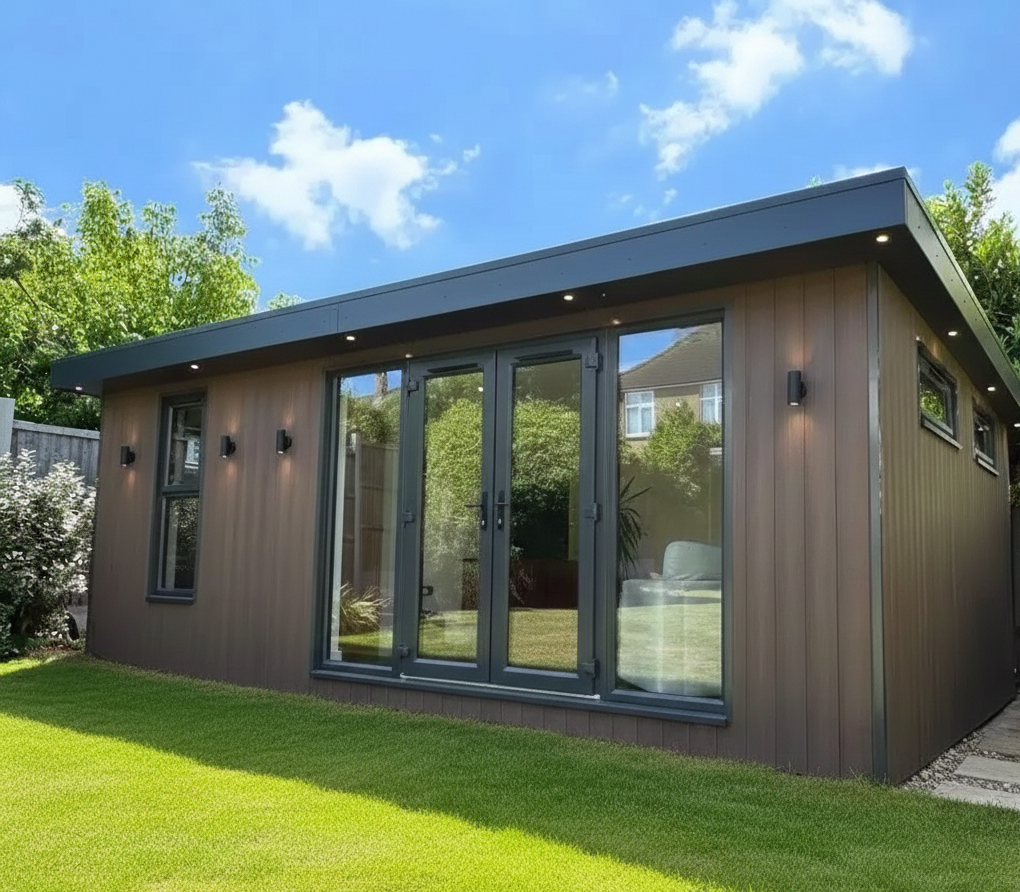
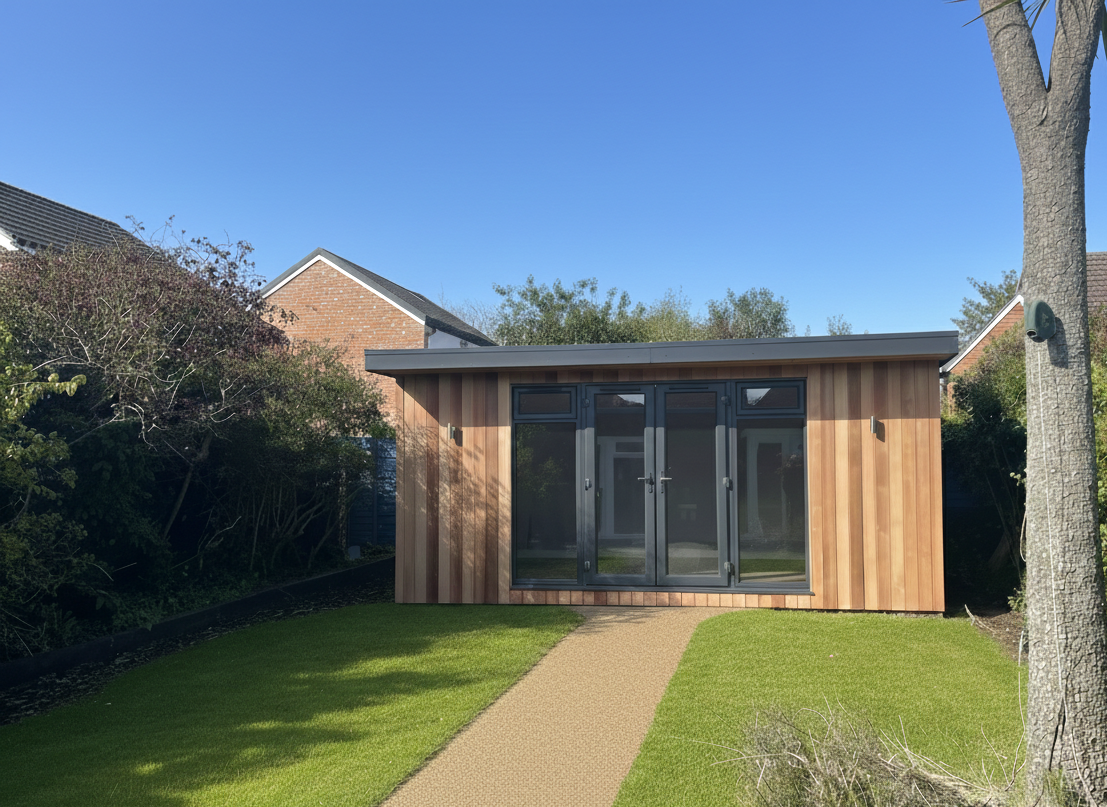
Getting the lighting right in your garden studio room can make the difference between a space that inspires productivity and one that leaves you squinting at your screen or struggling to see your work. Whether you’re setting up a home office, craft workshop, art studio, or yoga retreat, thoughtful lighting design ensures your garden studio performs beautifully from dawn until well after dusk.
At Essex Garden Studios, we’ve helped countless customers create perfectly lit workspaces tailored to their specific needs. In this comprehensive guide, we’ll share everything we’ve learned about illuminating a garden studio room effectively, covering natural light optimisation, artificial lighting choices, and the common pitfalls to avoid.
Start with Natural Light
Natural light should form the foundation of your garden studio room’s lighting strategy. It’s free, flattering, and proven to boost mood and productivity. The key lies in maximising daylight without creating problems like glare on screens or uncomfortable temperature fluctuations.
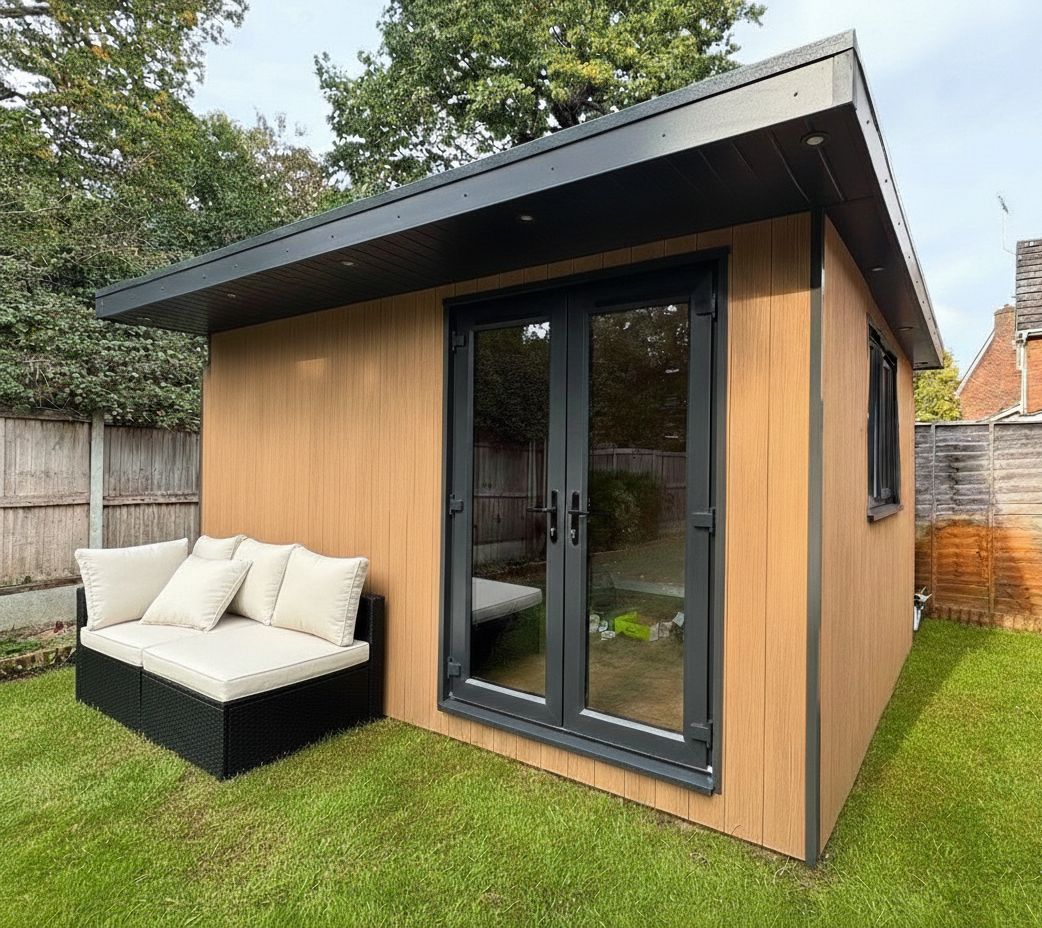
Window placement matters enormously. North-facing windows provide consistent, soft light throughout the day without harsh direct sunlight, making them ideal for artists and anyone working with colour-sensitive materials. South-facing windows flood your space with abundant light but may require blinds or solar control glazing to manage heat and brightness during summer months.
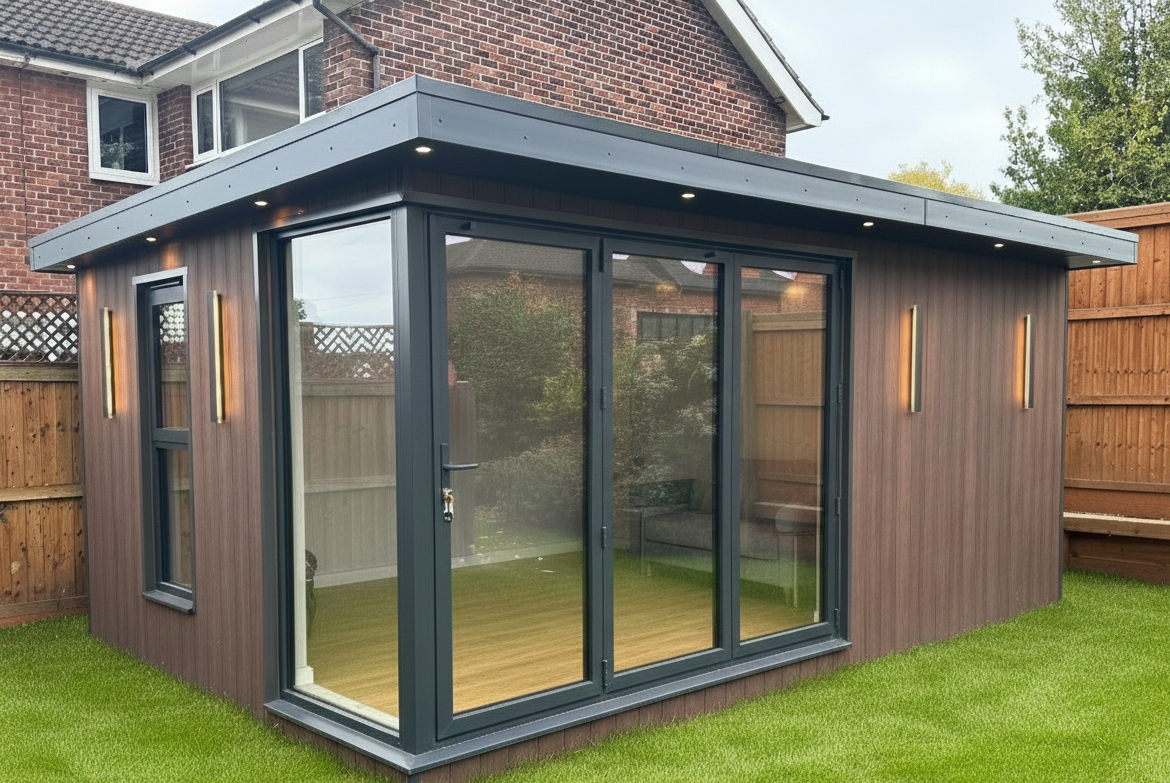
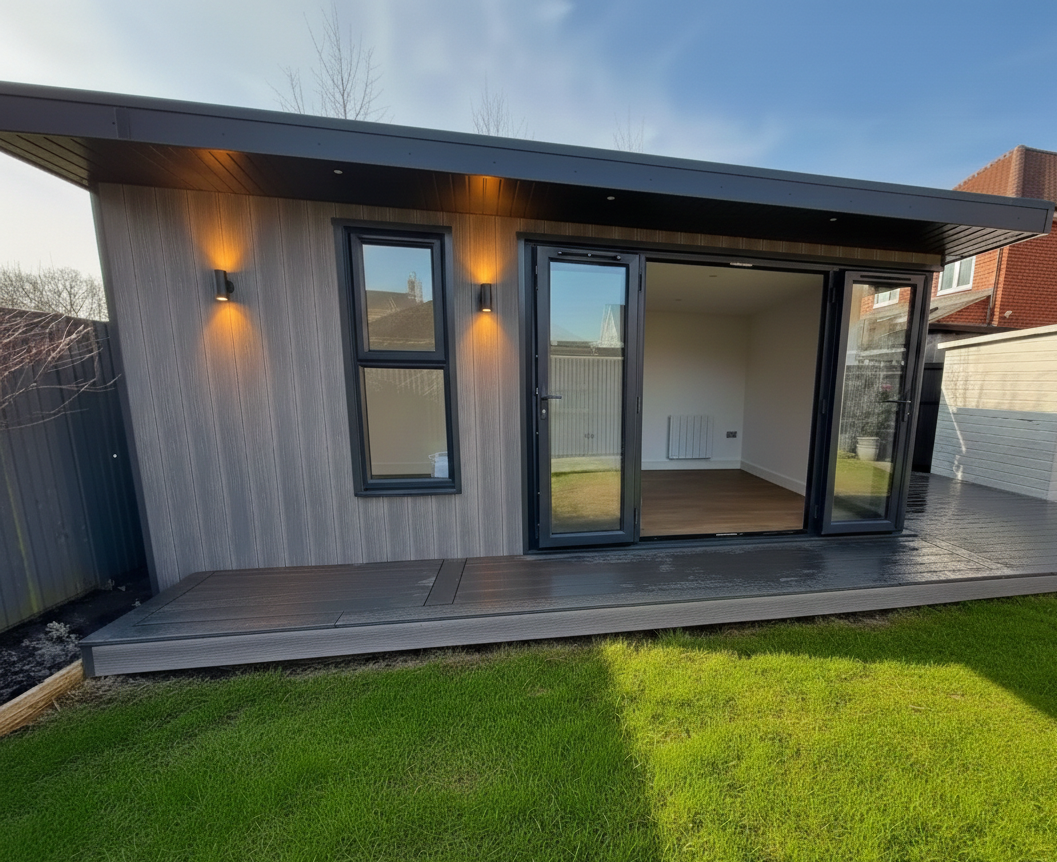
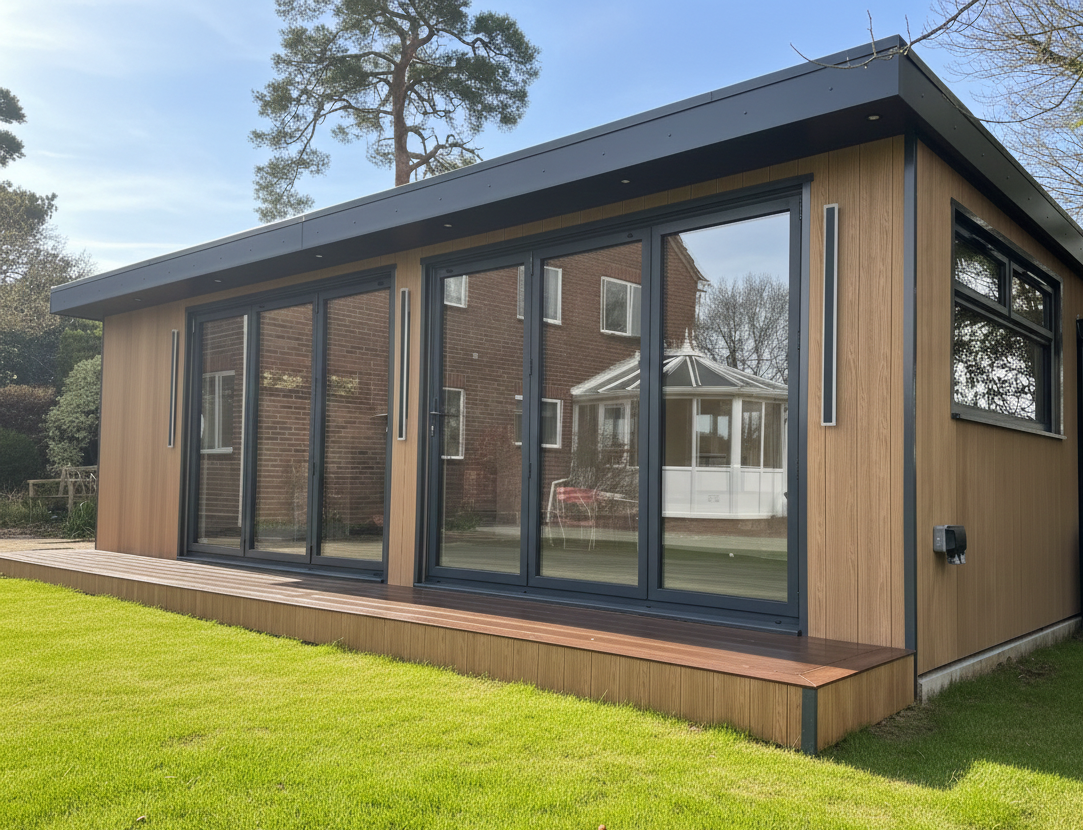
Bifold doors have become increasingly popular in garden studio design, and for good reason. They blur the boundary between indoor and outdoor spaces whilst admitting generous amounts of daylight. Position your desk perpendicular to large glazed areas rather than facing them directly; this orientation reduces screen glare whilst still allowing you to benefit from the natural light and enjoy garden views during breaks.
Skylights offer another excellent option for bringing natural light into your garden studio room. Positioned overhead, they distribute light evenly across your workspace without taking up valuable wall space. Modern skylights often include integrated blinds, allowing you to control light levels throughout the day. For detailed work requiring consistent illumination, north-facing skylights provide beautifully diffused light that won’t shift dramatically as the sun moves across the sky.
Layered Artificial Lighting
Even the brightest garden studio room needs artificial lighting for early mornings, winter evenings, and overcast days. The secret to effective artificial lighting lies in creating layers that work together harmoniously.
Ambient lighting provides your base layer of illumination, ensuring the entire space is comfortably lit. Recessed ceiling spots or flush-mounted LED panels work well for this purpose, casting even light without visual clutter. Aim for warm white tones (around 3000K) for a cosy atmosphere, or cooler daylight tones (4000-5000K) if you need alertness and concentration.
Task lighting addresses specific activities requiring focused illumination. A quality adjustable desk lamp proves invaluable for detailed work, whether you’re reviewing documents, crafting intricate jewellery, or editing photographs. LED lighting excels here, offering bright output with minimal heat generation and excellent colour rendering. Look for lamps with adjustable colour temperature settings, allowing you to match your task lighting to the ambient conditions or your circadian preferences throughout the day.
Accent lighting adds depth and visual interest to your garden studio room whilst serving practical purposes. Under-shelf LED strips illuminate storage areas, wall-mounted picture lights showcase artwork, and floor lamps create cosy reading corners. These supplementary light sources help reduce the contrast between brightly lit work areas and darker corners, easing eye strain during long working sessions.
Lighting for Specific Activities
Different uses demand different lighting approaches. Understanding what your garden studio room will primarily be used for helps you make informed decisions about fixture placement and specifications.
For video calls and content creation, even facial lighting proves essential. Position key lights at roughly 45-degree angles to your camera position, slightly above eye level. Avoid overhead lighting that casts unflattering shadows under your eyes and chin. Many professionals working from garden studios invest in ring lights or softbox panels that provide diffused, flattering illumination for on-camera appearances.
Craft work and detailed manual tasks require high-intensity, adjustable task lighting positioned to minimise shadows cast by your hands. Magnifying lamps combining bright LED lighting with optical magnification prove particularly useful for jewellery making, model building, and other precision work. Consider the colour rendering index (CRI) of your bulbs; a CRI above 90 ensures colours appear accurate and true, crucial if your work involves colour matching or painting.
Artists and designers often prefer diffused natural light supplemented by high-CRI LED panels. Avoid fluorescent lighting, which can distort colour perception. If you’re photographing your work within the studio, consistent colour temperature across all light sources simplifies post-processing and ensures accurate reproduction of your creations.
Common Lighting Mistakes to Avoid
Screen glare ranks among the most frequent complaints in poorly lit garden studio rooms. Position monitors away from windows and bright light sources, or use anti-glare screen protectors if repositioning isn’t practical. Blinds or curtains allow you to control incoming daylight when it becomes problematic.
Relying on a single overhead light creates harsh shadows and uneven illumination. This mistake leads to eye strain and fatigue, particularly during extended working sessions. Multiple light sources at different heights and angles produce more comfortable, three-dimensional lighting.
Mixing colour temperatures creates visual discord that many people find subconsciously unsettling. If your ambient lighting uses warm white bulbs, ensure your task lighting matches or deliberately contrasts for effect. Random mixtures of warm, neutral, and cool lighting throughout a small space like a garden studio room rarely work well.
Forgetting about electrical planning during the design phase causes headaches later. Discuss your lighting requirements early in the garden studio specification process, ensuring adequate sockets and switching positions for your intended layout. It’s far simpler to install additional circuits during construction than to retrofit them afterwards.
Smart Lighting Controls
Modern LED lighting systems offer sophisticated control options that can transform how you use your garden studio room. Dimmer switches allow you to adjust light levels to suit different tasks and times of day. Smart bulbs and fixtures can be programmed to automatically adjust colour temperature throughout the day, supporting your natural circadian rhythms.
Consider installing separate switching circuits for different lighting zones. Being able to independently control ambient lighting, task lighting, and accent lighting gives you flexibility to create the perfect conditions for any activity without fumbling for individual lamp switches.
Creating Your Perfectly Lit Garden Studio Room
Thoughtful lighting design transforms a garden studio room from merely functional to genuinely inspiring. By maximising natural light through careful window and skylight placement, layering artificial lighting for flexibility, and tailoring your approach to your specific activities, you’ll create a space that serves you well throughout every season and every hour of the working day.
At Essex Garden Studios, we work closely with each customer to ensure their lighting requirements are fully addressed during the design and specification process. From bifold door orientation to electrical outlet positioning, every detail contributes to a garden studio room that’s a pleasure to work in.
Ready to start planning your own beautifully lit garden studio room? Explore our range of garden studios and review our detailed specifications to see how we can bring your vision to life.