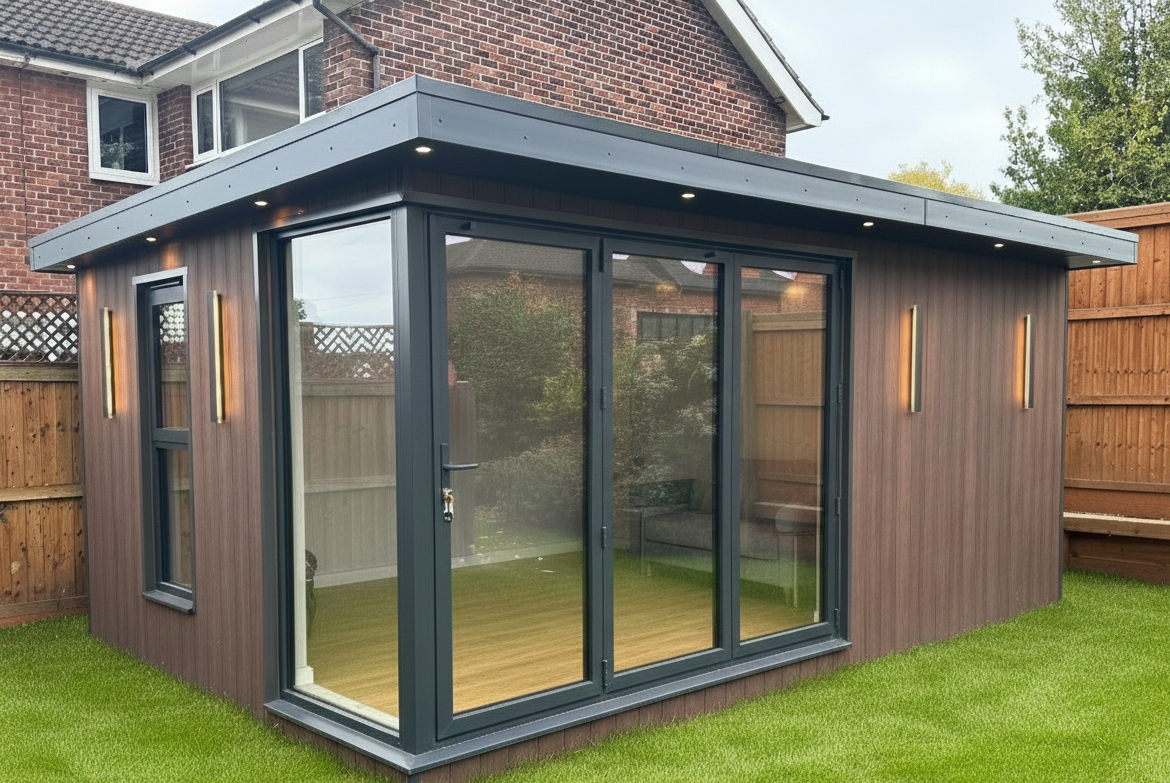
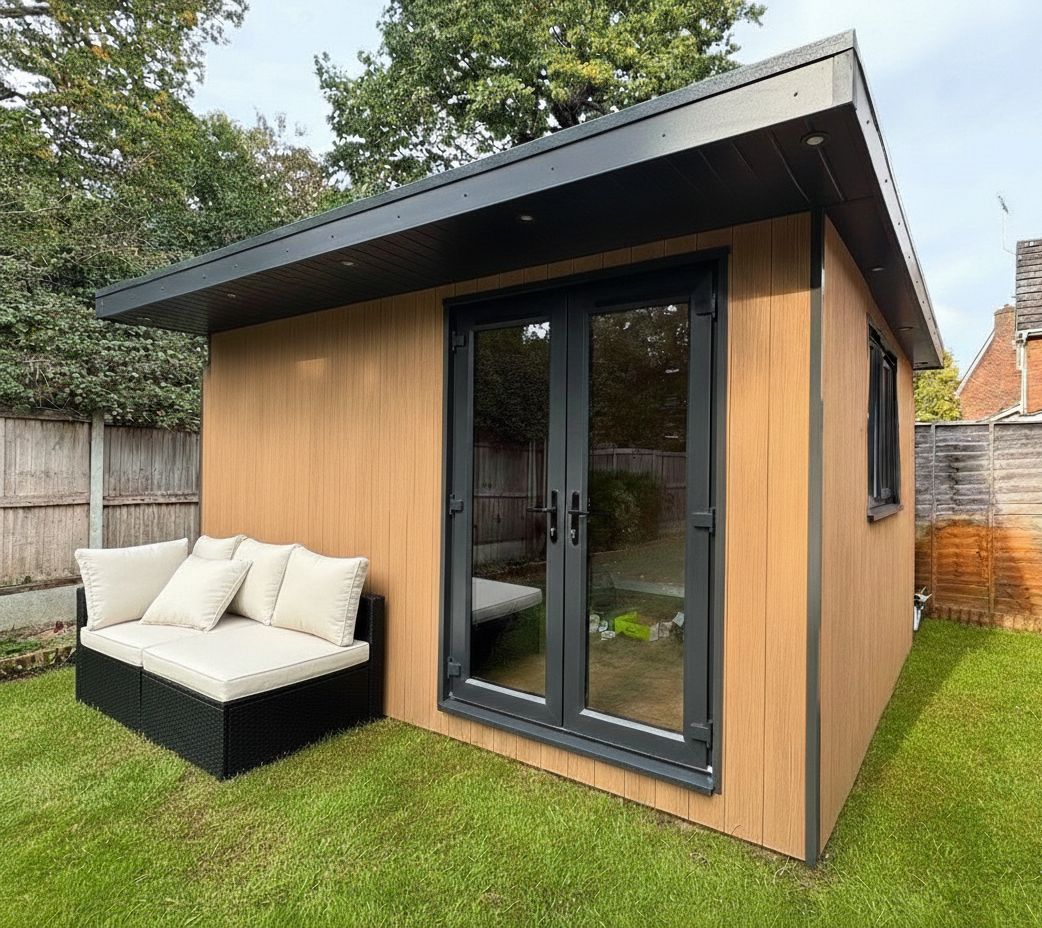
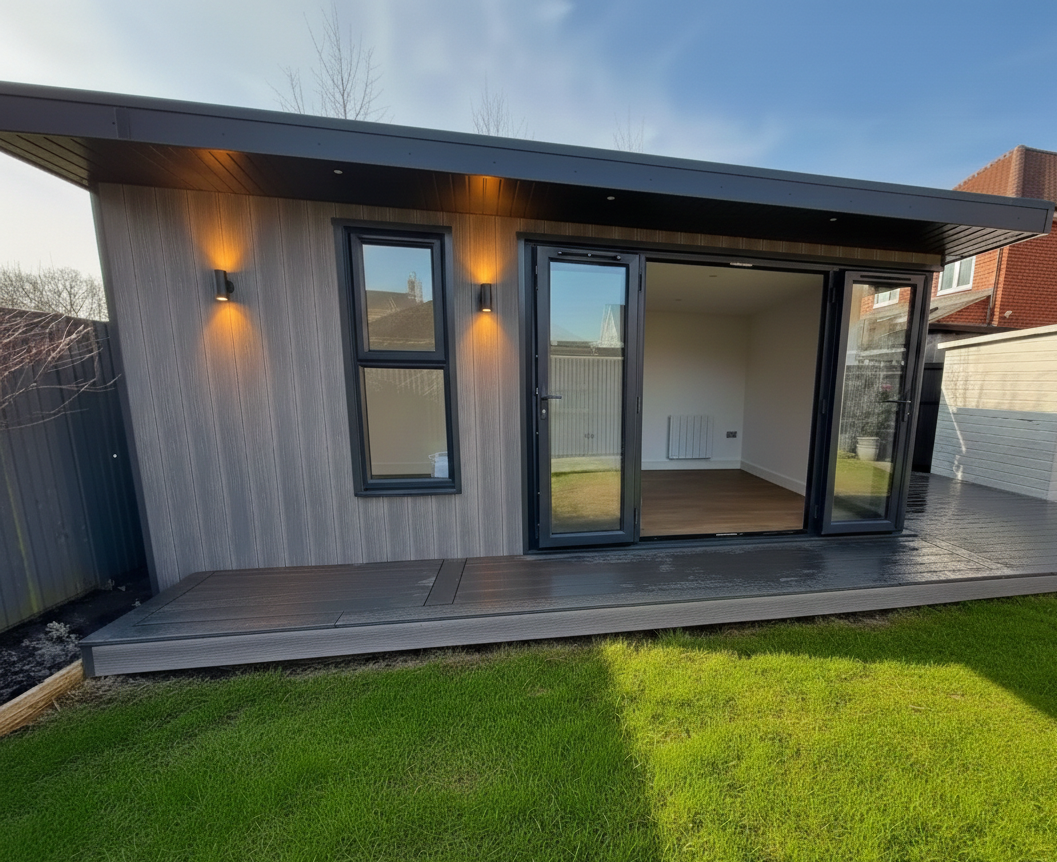
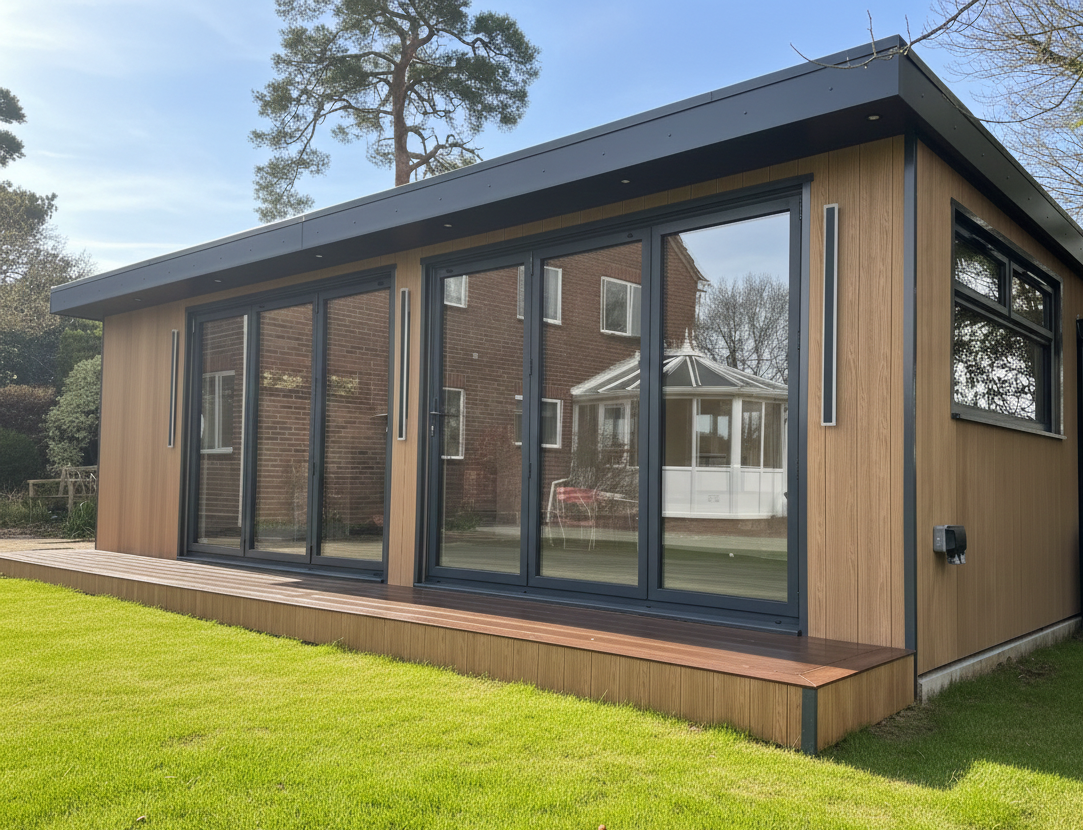
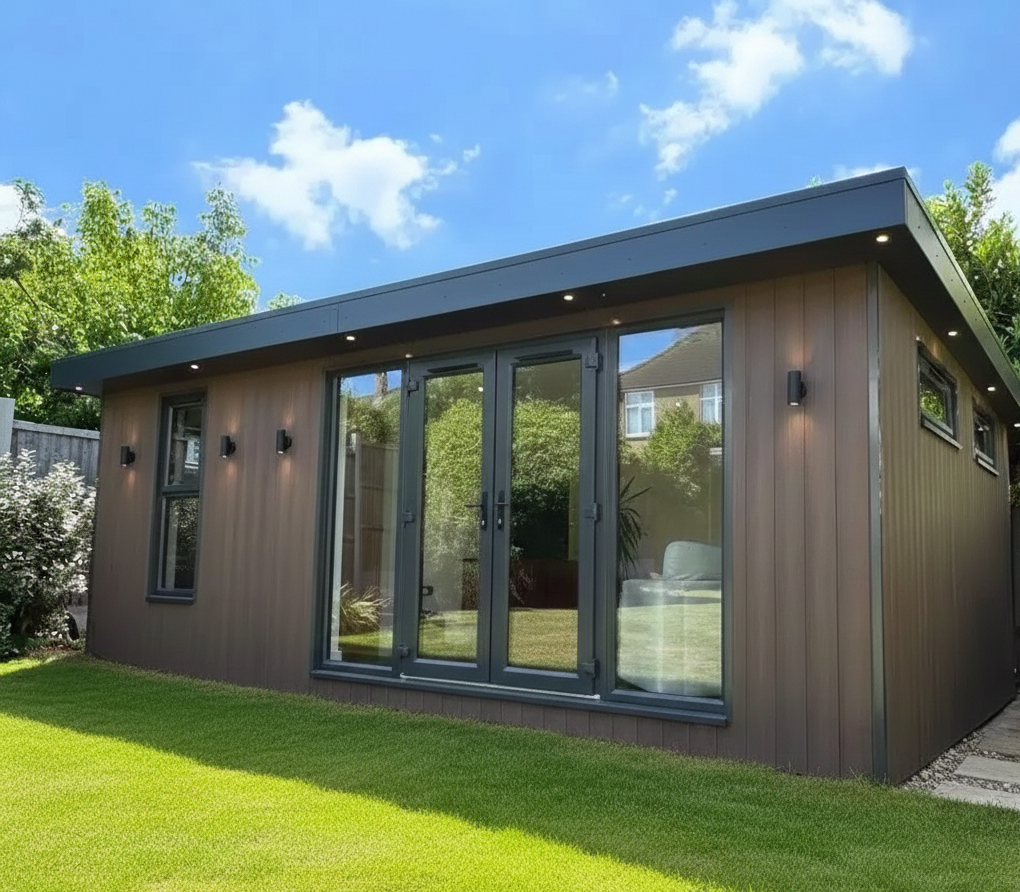
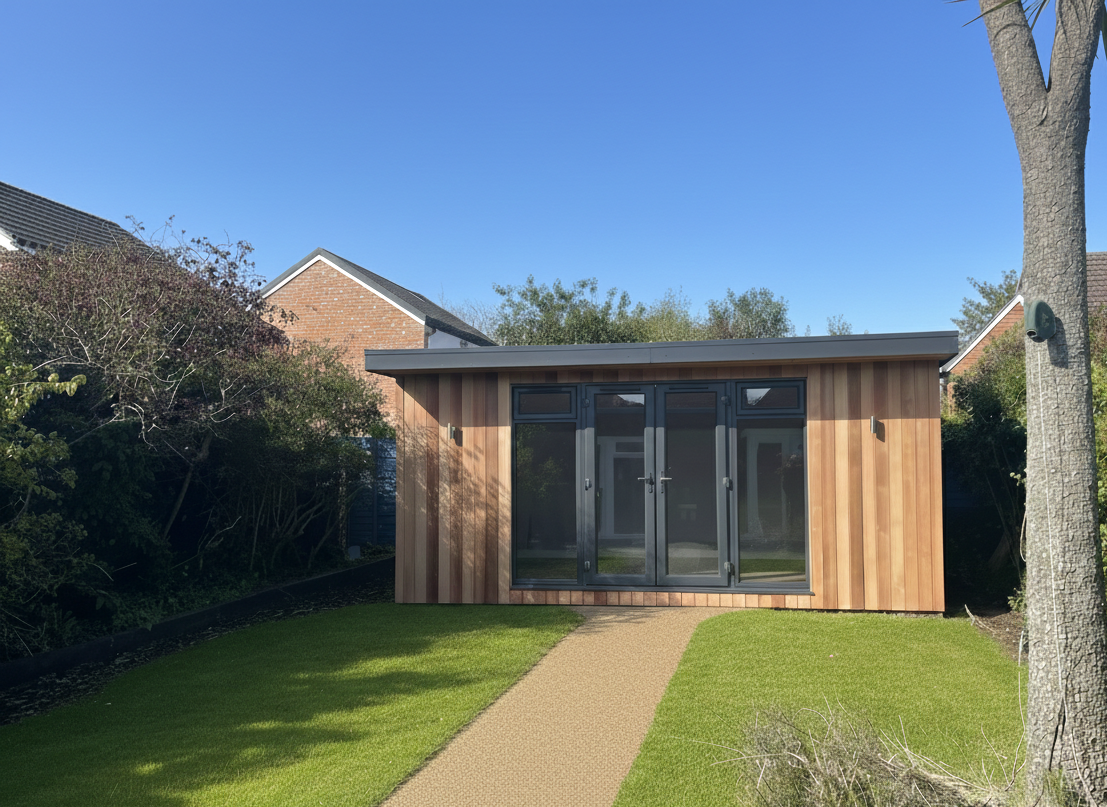
 If you have been thinking about adding a garden room, the first question most people ask is: what would I actually use it for? The honest answer is that the list is much longer than you might expect.
Yes, a garden room studio makes a great home office or gym. But plenty of people are putting theirs to far more interesting uses. This post covers 12 real ideas, covering everything from photography studios to pottery workshops and teen hangout spaces.
Quick Reference: 12 Garden Room Studio Uses
| Use | Who It Suits | Key Feature Needed |
|---|---|---|
| Home office | Remote workers, freelancers | Ethernet point, good natural light |
| Photography studio | Hobbyists, professionals | Plain walls, blackout blinds |
| Podcast recording room | Content creators | Acoustic panels |
| Music practice room | Instrumentalists, singers | Soundproofing |
| Teen hangout space | Families with teenagers | Comfy seating, separate entry |
| Tutoring room | Private tutors | Desk space, whiteboard |
| Pottery or craft workshop | Makers and crafters | Easy-clean floor, sink |
| Beauty or treatment room | Therapists, beauticians | Good lighting, washbasin |
| Yoga or movement studio | Fitness enthusiasts | Clear floor space, mirrors |
| Artist’s studio | Painters, illustrators | North-facing light, storage |
| Reading room or library | Book lovers | Shelving, armchairs |
| Garden bar and social space | Entertainers | Bar unit, sound system |
1. Home Office
The most popular use by far, and for good reason. A separate building at the end of the garden gives you a proper boundary between home life and work life in a way that a spare bedroom never quite does. You walk out of the house, walk in through a different door, and your brain switches into work mode.
A bespoke garden studio designed as a dedicated office can include built-in desks, cable management, multiple power points, and fast ethernet connections. Full insulation means it stays warm in winter and cool in summer without running up an enormous electricity bill.
2. Photography Studio
A garden room studio is a practical choice for photographers who want a controlled space to shoot in. You can set up permanent backdrops, run studio lighting without worrying about extension leads trailing through the house, and keep all your equipment safe and dry.
Blackout blinds let you control exactly how much natural light enters, and a plain painted wall can double as a backdrop for portrait work. If you shoot products or headshots professionally, having a dedicated space saves you hiring a studio every time.
3. Podcast Recording Room
Podcasting has grown enormously, and one of the biggest challenges for home-based podcasters is background noise and echo. A garden room puts natural distance between you and household sounds, and with some simple acoustic treatment on the walls and ceiling, you can get a noticeably cleaner recording.
This works just as well for voiceover artists, YouTubers, and anyone who produces audio or video content regularly. The separation from the rest of the house is genuinely useful, not just a nice bonus.
4. Music Practice Room
Whether you play guitar, drums, piano, or sing, practising at home can cause friction with the rest of the family and with neighbours. A garden room gives you somewhere to make noise without guilt.
Basic acoustic panels or foam tiles on the internal walls will help to reduce echo and dampen sound. For drum kits or louder instruments, it is worth discussing soundproofing options during the design stage. Some of these can be added as part of a fully bespoke build where the room is designed specifically around your needs.
5. Teen Hangout Space
This is one of the most practical uses for a multi-purpose garden room, and one that often gets overlooked. Teenagers need somewhere to spend time with friends that gives them a sense of independence while keeping them close to home.
A garden room set up with a sofa, a TV, a games console, and maybe a small bar fridge is something most teenagers would genuinely use. Parents often appreciate it too, because it keeps the main house a little quieter. A separate entry door adds to the sense of having their own space.
6. Private Tutoring Room
If you work as a private tutor, having a dedicated room to teach in makes a real difference. It feels more professional than sitting at the kitchen table, it gives your student somewhere quiet to focus, and it keeps your working life out of your living space.
A small desk and chair set-up, a whiteboard or flip chart, and good overhead lighting is really all you need. Some tutors add a small bookshelf or a digital screen for shared resources. Because it is a separate building, students arrive and leave without coming through your home.
7. Pottery or Craft Workshop
For anyone who does hands-on making, having a proper workshop space is a big deal. Clay, paint, resin, and similar materials are messy, and working on the kitchen table means cleaning everything away every time you stop.
A garden room gives you a space where you can leave a project mid-way through and come back to it. An easy-clean floor, a utility sink, and plenty of shelving for materials and tools makes a craft workshop genuinely practical. Our garden workshop builds can be set up with exactly this kind of practical fit-out in mind.
8. Beauty or Treatment Room
A growing number of people who work in beauty and wellness are using garden rooms as their primary treatment space. It lets you run a professional business from home without blurring the lines between client visits and family life.
The room needs to feel clean and calm, with good lighting, a washbasin, adequate storage for products, and a comfortable treatment bed. Because clients arrive and leave through a separate entrance, they never need to come through the house. Many therapists, beauticians, massage practitioners, and aestheticians have found this to be a cost-effective alternative to renting a salon room.
9. Yoga or Movement Studio
A yoga studio at the end of the garden is a genuinely appealing idea, and it does not need to be complicated. Clear floor space, a sprung or cushioned floor covering, and a mirror on one wall is enough for most people.
If you teach yoga or Pilates to small groups, a garden room gives you a dedicated space that keeps your home separate from your work. Even for personal use, the act of walking out to a separate space before practice can help you settle into it more quickly. Good ventilation and heating make it usable all year round.
10. Artist’s Studio
Painters, illustrators, and printmakers often struggle to find good working space in a standard home. Mess is a factor, but so is light. A garden room can be positioned and glazed to bring in consistent natural light, which makes a real difference when working with colour.
North-facing rooflights or large windows facing north give you soft, even daylight without direct sun causing glare or shadows. Combined with good storage for materials and a hard floor that is easy to clean, a garden room makes a very practical home studio for visual artists of all kinds.
11. Reading Room or Personal Library
Not every use for a garden room needs to be work-related or tied to a specific hobby. Sometimes, people simply want somewhere quiet to read without interruption.
A cosy reading room with fitted shelving, a comfortable armchair, and good task lighting is a genuinely appealing use of the space. It works especially well in households with young children where quiet time inside the main house is hard to find. Some people add underfloor heating to make it particularly comfortable in autumn and winter.
12. Garden Bar and Social Space
A home bar in the garden has become a popular choice for people who like to entertain. A well-set-up space with a bar unit, some bar stools, a TV or sound system, and good lighting gives you somewhere to host friends without opening up the whole house.
This kind of space works well as a year-round extension of the garden, particularly in the UK where the weather is unpredictable. You can have the doors open in summer and use it as an enclosed space when it is cold. The optional upgrades and extras available from Essex Garden Studios, such as built-in sound systems and mood lighting, are particularly well suited to a bar and entertainment space.
Does a Garden Room Studio Need Planning Permission?
In most cases, garden rooms fall under permitted development rights, which means you do not need to apply for planning permission. However, there are size limits and other conditions that apply, and these vary depending on whether your property is in a designated area or is a listed building.
The Planning Portal’s outbuildings guidance is a reliable place to check the current rules for England. It covers permitted development limits clearly and is kept up to date. For anything complex, it is worth speaking to your local planning authority or your garden room builder early in the process.
Thinking About a Garden Room Studio?
The best thing about a garden room is that it does not have to be one thing. Plenty of people start out using theirs as an office five days a week and a recording space or workout room at the weekends. The building works for whatever you need it to do.
If you want to see what is possible, Essex Garden Studios works with customers across Essex and Suffolk to design and build garden rooms for all kinds of uses. Every build comes with a 10-year structural guarantee and is fully insulated for year-round use.
Get in touch to talk through your ideas.