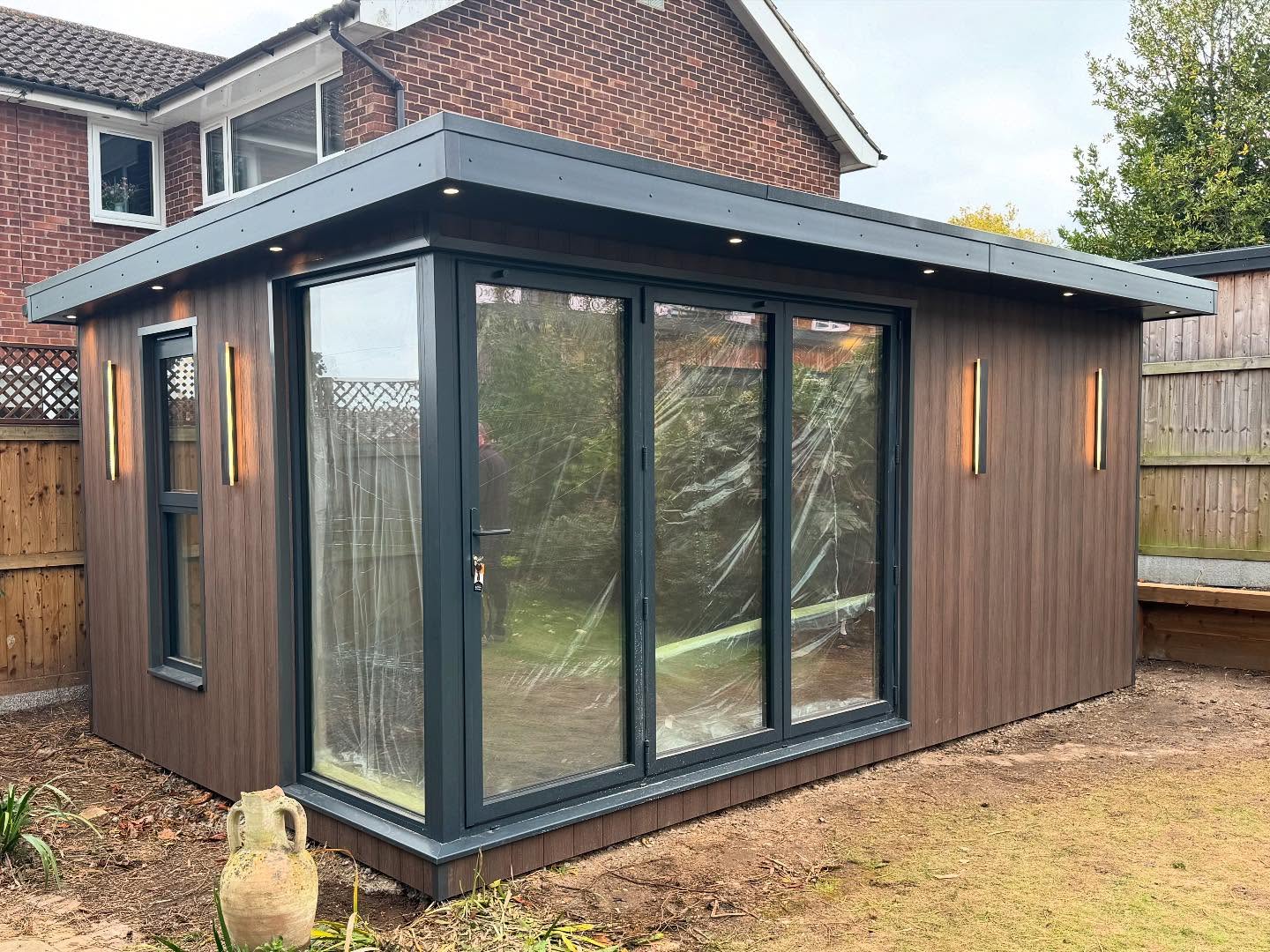
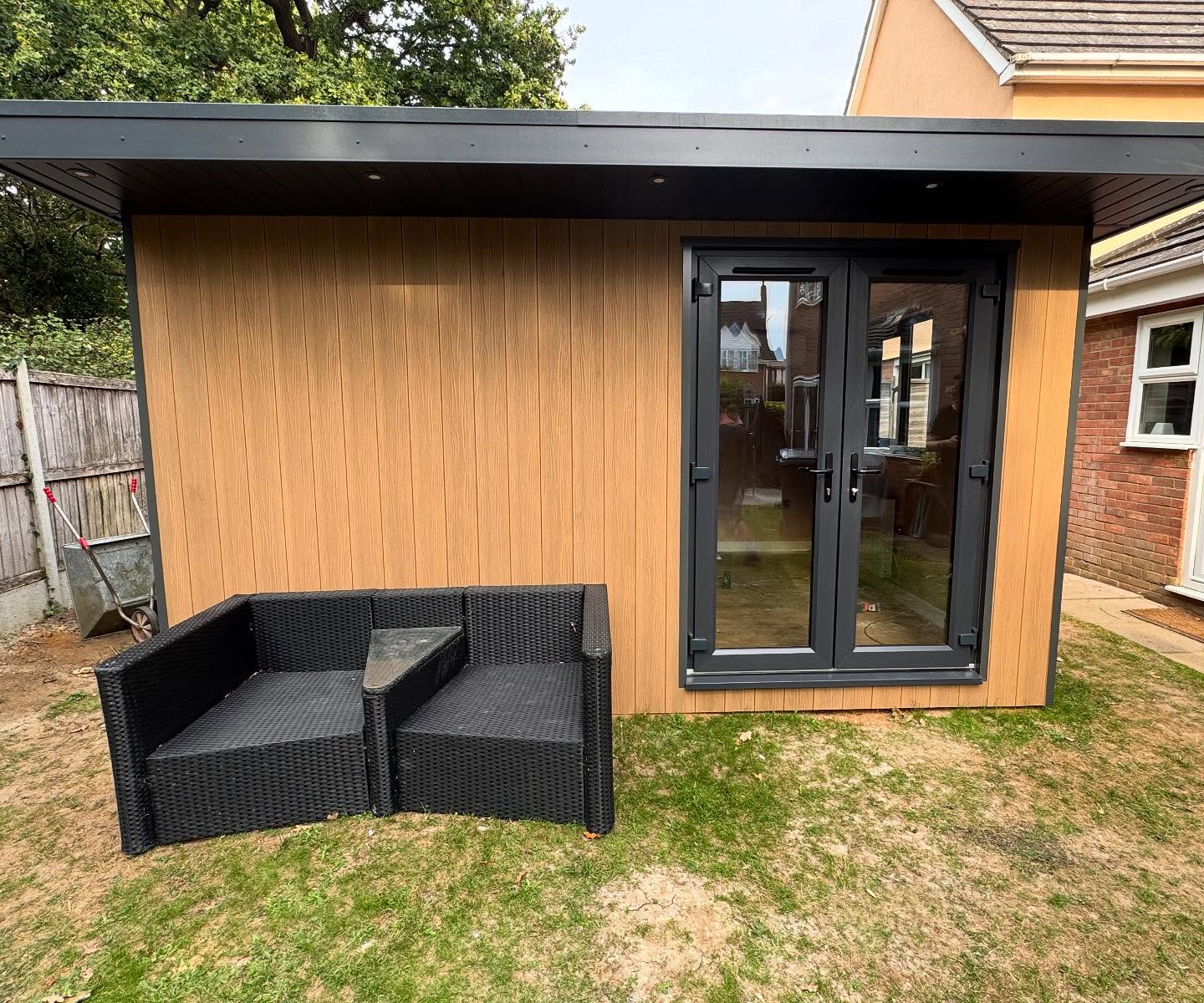
Planning a garden room is an exciting project, but before you start, you need to understand the rules around planning permission and building regulations. The good news is that most garden rooms can be built without formal planning permission. However, the regulations can be complex, and getting it wrong could result in costly mistakes or enforcement action.
This complete guide covers everything you need to know about planning permission and building regulations for garden rooms in the UK, with specific guidance for homeowners in Essex.
Do Garden Rooms Require Planning Permission?
Most garden rooms in the UK can be built under permitted development rights, meaning you do not need to apply for planning permission. However, your garden room must meet certain conditions to qualify.
Permitted development rights are designed to allow homeowners to make improvements to their properties without needing formal approval. For garden rooms, these rights fall under Class E of the Town and Country Planning (General Permitted Development) (England) Order 2015.
The Key Rules for Permitted Development
To build a garden room without planning permission, your project must meet all of the following conditions.
Size restrictions: Your garden room (along with any other outbuildings) must not cover more than 50% of the total garden area around the original house. The original house means the property as it was first built, or as it stood on 1 July 1948 if built before that date.
Height restrictions: The maximum height depends on where you position your garden room:
| Location | Maximum Height |
|---|---|
| Within 2 metres of any boundary | 2.5 metres total height |
| More than 2 metres from boundaries (flat roof) | 3 metres |
| More than 2 metres from boundaries (pitched roof) | 4 metres to the ridge |
The eaves height must not exceed 2.5 metres regardless of location.
Location restrictions: Garden rooms cannot be built forward of the principal elevation (front wall) of your house. They must be positioned in your rear or side garden, not the front garden.
Use restrictions: The garden room must be used for purposes incidental to the enjoyment of the house, such as a home office, gym, hobby room, or relaxation space. It cannot be used as separate self-contained living accommodation.
Understanding the 2.5 Metre Rule
The 2.5 metre height rule is particularly important because it affects where you can position your garden room and what design options are available.
If your garden room is built within 2 metres of any boundary, the total height (including the roof) must not exceed 2.5 metres. This is measured from natural ground level. The rule exists to protect neighbours’ privacy and access to natural light.
This means that if you have a smaller garden and need to position your garden room close to a boundary, you will be limited to a lower structure. If you can position the building more than 2 metres from all boundaries, you have more flexibility with height.
Why Does the 2.5 Metre Rule Exist?
The height restriction for garden rooms near boundaries is designed to:
- Reduce the visual impact of new structures on neighbouring properties
- Protect neighbours’ access to natural light
- Maintain the character of residential areas
- Prevent overlooking and privacy concerns
When Planning Permission Is Required
Despite permitted development rights, there are situations where you will need to apply for planning permission for your garden room.
Property type: If you live in a flat, maisonette, or converted house, permitted development rights do not apply. You will need planning permission for any external structure.
Listed buildings: If your property is a listed building, you will need planning permission (and possibly listed building consent) for any garden structure, regardless of size or location.
Conservation areas and designated land: Properties in conservation areas, National Parks, Areas of Outstanding Natural Beauty, the Broads, or World Heritage Sites face additional restrictions. In these areas, the maximum floor area for outbuildings positioned more than 20 metres from the house is limited to 10 square metres, and buildings at the side of the property always require planning permission.
Article 4 directions: Some areas have Article 4 directions that remove permitted development rights. Check with your local council if this applies to your property.
Exceeding the limits: If your garden room would exceed the height restrictions, cover more than 50% of the garden area, or be positioned forward of the principal elevation, you will need planning permission.
Residential use: If you plan to use the garden room as an annexe with sleeping accommodation, you will need planning permission and must comply with building regulations.
Planning Rules for Garden Rooms in Essex
Essex has several district and borough councils, each with their own planning departments. While permitted development rules apply nationally, some areas may have additional local restrictions.
Essex Conservation Areas
Essex has numerous conservation areas, including parts of historic towns like Saffron Walden, Dedham, and Maldon. If your property is within a conservation area:
- Maximum floor area for outbuildings more than 20 metres from the house is 10 square metres
- Materials and design may need to be sympathetic to the area’s character
- Some conservation areas have Article 4 directions that remove certain permitted development rights
Essex Planning Authorities
Each Essex council may have specific guidance on garden rooms:
- Basildon District Council
- Braintree District Council
- Brentwood Borough Council
- Castle Point Borough Council
- Chelmsford City Council
- Colchester Borough Council
- Epping Forest District Council
- Harlow District Council
- Maldon District Council
- Rochford District Council
- Tendring District Council
- Uttlesford District Council
It is worth checking with your local authority for any additional requirements specific to your area.
Green Belt Considerations
Significant portions of Essex fall within the Metropolitan Green Belt, particularly areas closer to London. While permitted development rights generally still apply in Green Belt areas, the visual impact on the Green Belt’s openness becomes more significant for larger structures.
Ready to get started?
Building Regulations vs Planning Permission
Building regulations and planning permission are two separate things. You might need both, one, or neither depending on your project.
Planning permission deals with where you can build and what your structure looks like. Building regulations focus on how safely your building is constructed, covering structural safety, energy efficiency, and fire safety.
When Building Regulations Apply to Garden Rooms
Under 15 square metres: Building regulations will not normally apply if the floor area is less than 15 square metres and the building contains no sleeping accommodation.
Between 15 and 30 square metres: Building regulations will not normally apply provided the building contains no sleeping accommodation and is either at least one metre from any boundary, or constructed of substantially non-combustible materials.
Over 30 square metres: Full building regulations approval is always required for structures over 30 square metres.
Sleeping accommodation: Any garden room with sleeping accommodation requires building regulations approval, regardless of size.
Electrical Work Requirements
All electrical work in garden rooms must comply with Part P of the Building Regulations. This applies even when the structure itself does not require building regulations approval.
Your electrician must be registered with a competent person scheme and will provide a certificate showing compliance. Keep this certificate safe as you will need it if you sell your property.
The Planning Portal provides detailed guidance on building regulations for outbuildings, including when approval is needed and when buildings are exempt.
Garden Room Foundations and Regulations
Proper foundations are essential for any garden room, but they do not usually trigger additional planning requirements.
Why Foundations Matter
A solid foundation ensures your garden room:
- Remains level and stable over time
- Avoids structural issues like cracks from uneven settling
- Prevents moisture problems and damp
- Lasts for many years without major repairs
Foundation Types
The type of foundation depends on your site conditions, access, and ground type:
Strip foundations: A typical foundation consists of concrete strips (usually 450mm wide and 300mm deep) topped with a steel-reinforced concrete subframe. This spreads the weight of the building evenly.
Piles or pads: For sites with limited access, concrete beams can sit on piles or pads spaced approximately 1.2 metres apart.
Ground screws: A modern option that causes minimal disruption to your garden. Ground screws are quick to install and work well on various soil types.
Concrete slabs: A solid option for larger garden rooms, providing a robust, level base.
Do Foundations Affect Planning?
Foundations themselves do not normally affect planning permission requirements. However, you should ensure:
- The total height of the finished building (including any base build-up) stays within permitted development limits
- The foundation does not extend beyond your property boundaries
- Any excavation work respects underground services and drainage
Council Tax and Garden Rooms
Many homeowners wonder whether adding a garden room will affect their council tax. The answer depends on how you use the space.
Leisure use: If your garden room is used for personal leisure, as a home office, gym, or hobby space, it will not normally affect your council tax band.
Independent accommodation: If your garden room has sleeping, cooking, and bathroom facilities that make it a self-contained dwelling, it may be assessed for a separate council tax band.
For more detailed information, see our guide on council tax and garden rooms.
Neighbour Objections and Your Garden Room
Permitted development rights do not require neighbour consultation. However, neighbours can still raise concerns, and it is often wise to discuss your plans with adjacent neighbours before you start building.
Common Neighbour Concerns
- Privacy and overlooking from windows
- Loss of light caused by the structure
- Visual impact and aesthetics
- Noise during construction
- Ongoing noise from the garden room’s use
Avoiding Disputes
To minimise the risk of disputes:
- Discuss your plans with neighbours early in the process
- Consider the visual impact from neighbouring properties
- Position windows to avoid overlooking
- Choose materials and designs that blend with the surroundings
If disputes do arise, mediation can provide a structured way to resolve concerns without legal action. For more guidance, see our article on neighbour objections to garden rooms.
Ready to get started?
The Certificate of Lawful Development
If you are unsure whether your garden room falls within permitted development rights, you can apply for a Certificate of Lawful Development. This provides legal certainty that your proposal is permitted without requiring full planning permission.
The fee is typically around £100 to £200 and provides valuable peace of mind, particularly for larger or more complex proposals. The certificate also provides useful documentation if you sell your property in the future.
Getting Started with Your Garden Room Project
Before starting your garden room project:
- Measure your garden and calculate whether outbuildings would cover more than 50% of the area around your original house
- Check your property status to see if you are in a conservation area, listed building, or other designated area
- Consider the position and whether your preferred location is within 2 metres of any boundary
- Think about the height you need and whether this fits within permitted development limits
- Decide on the use and whether sleeping accommodation will be required
- Contact your local council if you have any doubts about whether planning permission is needed
At Essex Garden Studios, our bespoke garden rooms are constructed under permitted development rights, and we can guide you if your project may be close to any of the limitations. The responsibility for ensuring compliance falls on the homeowner, but we will advise you every step of the way.
Summary: Key Points to Remember
- Most garden rooms can be built under permitted development rights without planning permission
- The 2.5 metre height limit applies when building within 2 metres of any boundary
- Garden rooms cannot cover more than 50% of your garden area
- Building regulations are separate from planning permission and may apply depending on size and use
- All electrical work must comply with Part P of Building Regulations
- Properties in conservation areas, listed buildings, and designated land face additional restrictions
- A Certificate of Lawful Development can provide legal certainty for your project
For more information about planning permission, visit the Planning Portal outbuildings guidance.
This guide provides general information about planning permission and building regulations for garden rooms in England. Rules in Wales, Scotland, and Northern Ireland may differ. Always check with your local planning authority before starting work, as local restrictions may apply.