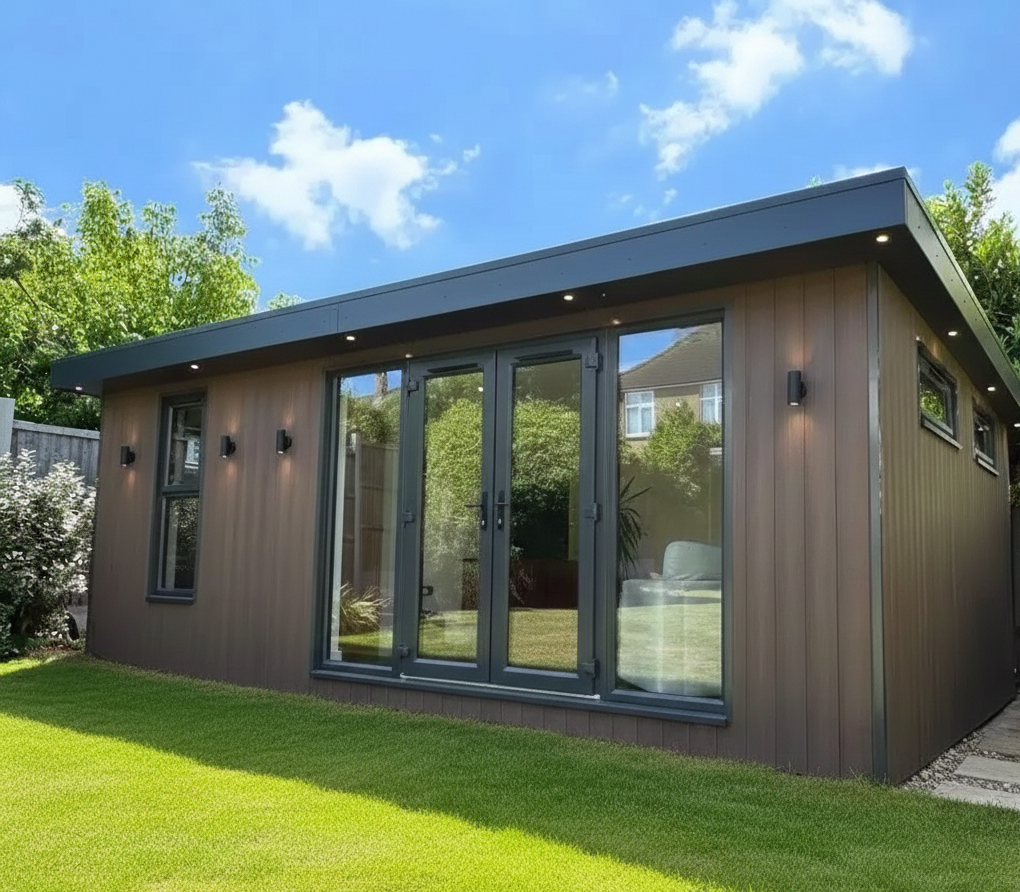
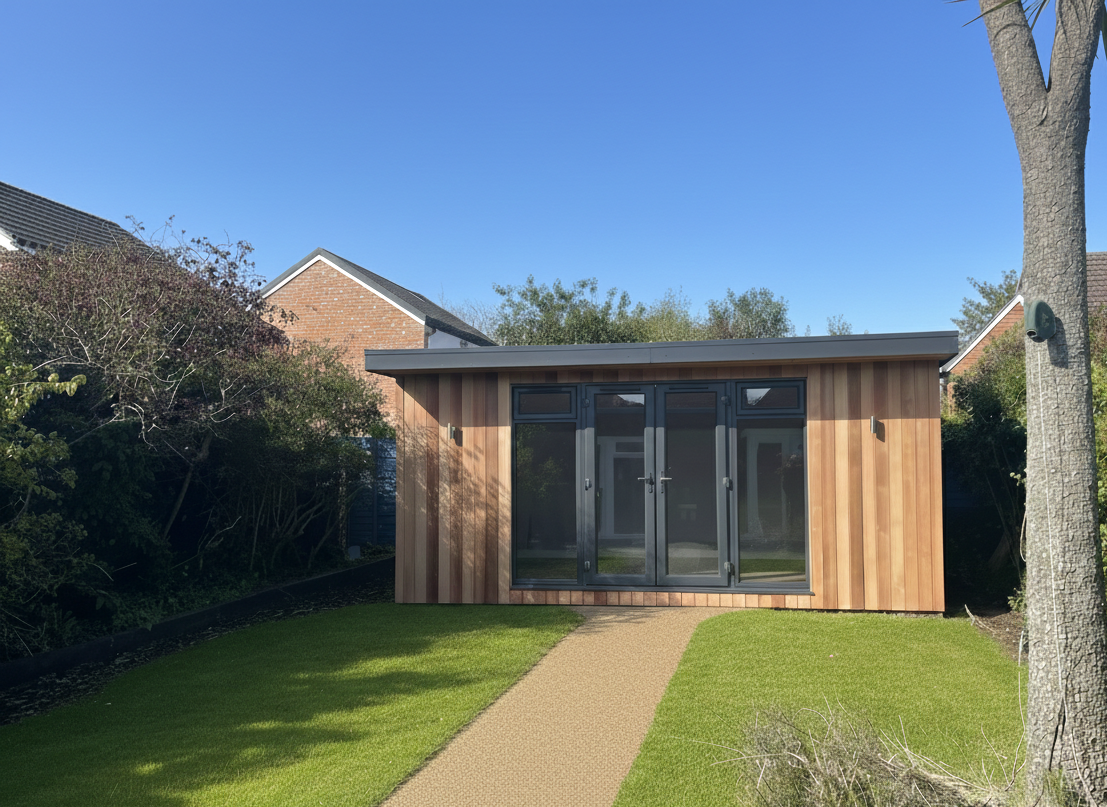
Setting up a home gym in your garden sounds straightforward until you start measuring. That treadmill you imagined fitting perfectly suddenly looks too big. The weights you wanted need more clearance than you thought. Proper planning makes the difference between a gym you’ll actually use and one that frustrates you.
A garden gym room needs careful layout planning before you buy a single piece of equipment.
Working Out Your Space Requirements
Different types of exercise need different amounts of room. Before deciding on equipment, think about how you actually exercise and what movements you need to perform.
| Equipment Type | Minimum Space Needed | Notes |
|---|---|---|
| Treadmill | 2m x 1m (plus 1m behind for safety) | Running requires space to fall backwards safely |
| Exercise bike | 1.5m x 1m | Includes room to mount and dismount |
| Rowing machine | 3m x 1m | Full extension of the rowing action needs length |
| Free weights area | 2m x 2m | Space for lunges, deadlifts, and lateral movements |
| Squat rack | 2m x 2m (plus 2m height) | Clearance above for overhead presses |
| Yoga or stretching | 2.5m x 1.5m | Enough for a mat plus full arm extension |
| Multi-gym station | 2.5m x 2m | Varies by model, check specific requirements |
Remember that these are minimum measurements. More space always feels better when you’re exercising, especially if you’re lifting heavy or doing movements that travel across the floor.
Flooring That Protects and Performs
Standard flooring won’t survive gym use. Dropped weights damage surfaces. Running machines vibrate. Sweat causes slippery patches. Your flooring choice affects both safety and the longevity of your gym.
Rubber flooring tiles are the most common choice for home gyms. They absorb impact, protect the floor underneath, and provide grip. For areas where you’ll drop weights, consider thicker rubber mats of at least 15mm.
Avoid polished or laminate surfaces in workout areas. They become dangerously slippery when wet and offer no shock absorption for high-impact activities.
Some gym users prefer to install basic flooring across the whole room and add specific mats where needed. This works well if you have multiple zones with different requirements.
Electrical Requirements
Powered gym equipment has specific electrical needs that you should plan for during the build phase rather than trying to add afterwards.
Treadmills and elliptical trainers typically need a standard 13-amp socket, but check your equipment specifications. Some commercial-grade machines require dedicated circuits.
Position sockets where cables won’t create trip hazards. Running a power lead across a floor where you’re exercising is asking for problems.
If you’re planning a fan or air conditioning unit, these need their own power supply too. The Energy Saving Trust provides guidance on running costs for electrical appliances, which helps you budget for ongoing gym expenses.
Ventilation and Temperature Control
Exercise generates heat and sweat. Without proper ventilation, your garden gym becomes uncomfortable fast and can develop damp problems over time.
Opening windows provide natural ventilation but aren’t always enough for intense workouts. A wall-mounted fan helps air circulate even when windows are open. For serious gym users, air conditioning provides cooling in summer and can help with heating in winter too.
Your garden room specifications should include consideration of insulation. Proper insulation keeps the space warm enough in winter without excessive heating costs and prevents it becoming unbearably hot in summer.
Mirror Placement
Mirrors aren’t just vanity in a gym. They help you check your form during exercises, which prevents injuries. Position mirrors where you’ll see yourself during your most technical lifts.
A full-length mirror on one wall works for most home gyms. If you’re doing a lot of weight training, consider mirrors that let you see yourself from the side as well as the front.
Make sure mirrors are safely mounted and positioned away from areas where you might accidentally walk into them or knock them with equipment.
Creating Workout Zones
The best home gyms have clear zones for different types of exercise. This keeps your layout logical and prevents equipment from getting in the way.
A typical layout might include a cardio zone with your treadmill or bike, a strength zone with weights and a rack, and a floor zone for stretching and bodyweight exercises.
Keep your most-used equipment in the most accessible spots. If you primarily run, your treadmill shouldn’t be hidden in a corner. If weights are your focus, position your garden gym to make the weights area the centrepiece.
Planning for Growth
Your fitness goals will change over time. The equipment that excites you now might bore you in two years. Building in flexibility means your gym can evolve with you.
Leave some empty floor space for equipment you might add later. Plan electrical sockets in more locations than you think you need. Consider whether your flooring would survive different equipment if you changed your workout style.
A well-planned garden gym room becomes the space you actually want to exercise in. Getting the layout right from the start means less frustration and more motivation to train.