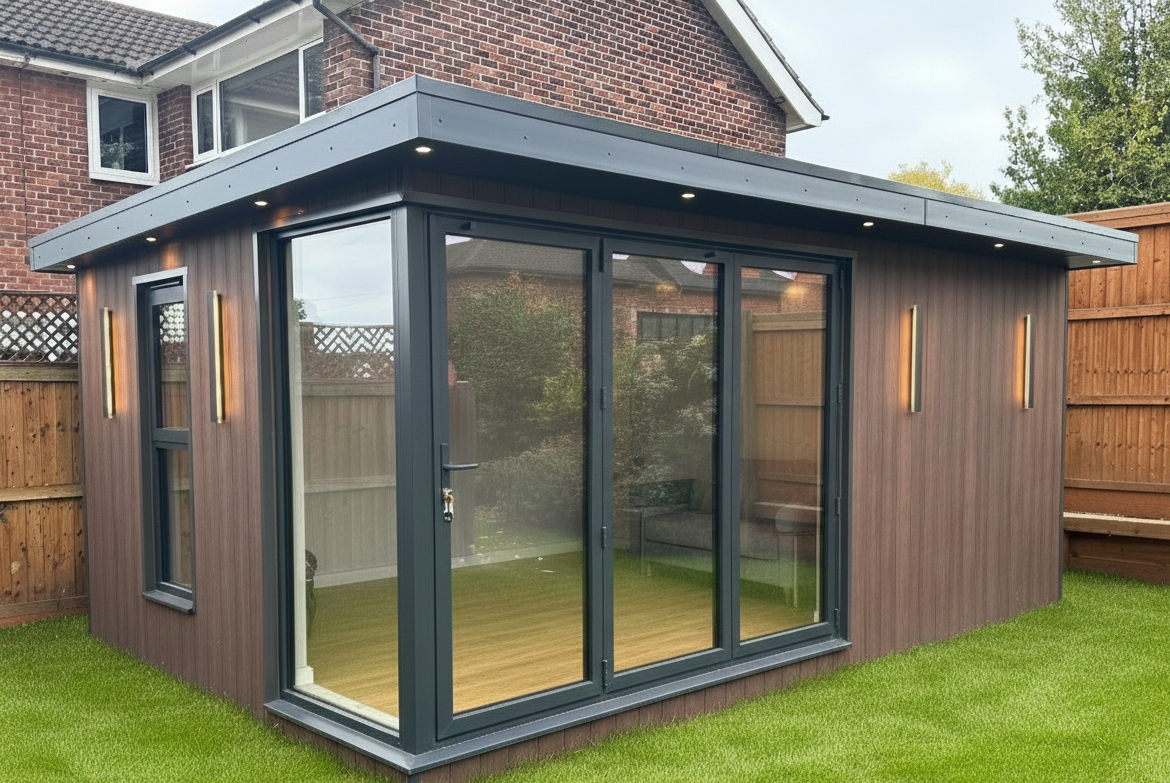
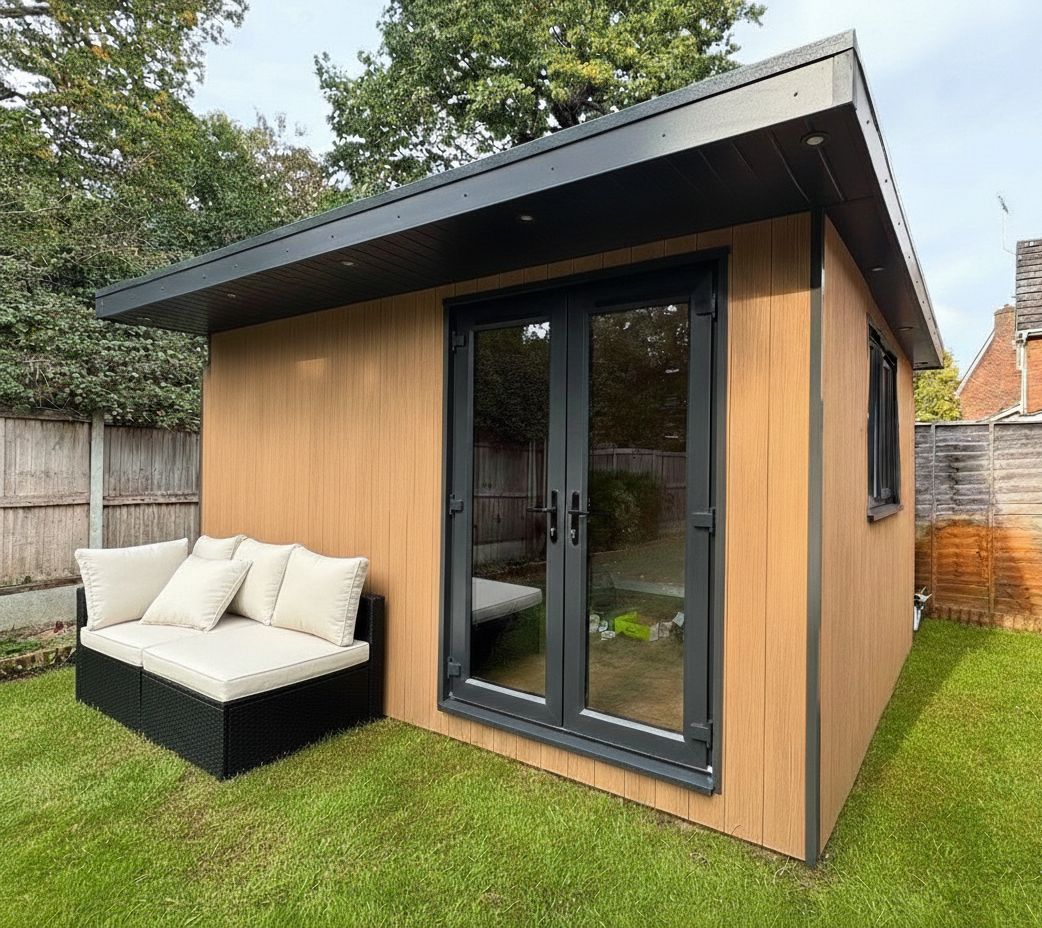
A garden gym room faces ventilation challenges that most other garden buildings simply don’t encounter. When you’re pushing through a high-intensity workout, your body generates significant heat and moisture, and that combination can quickly turn an enclosed space uncomfortable, unhealthy, and potentially damaging to the structure itself. Getting ventilation right isn’t just about comfort; it’s about protecting your investment and creating a space you’ll actually want to use.
At Essex Garden Studios, we’ve designed and installed garden gym rooms for everyone from casual fitness enthusiasts to serious athletes training daily. Through that experience, we’ve learned exactly what it takes to maintain optimal air quality and temperature, regardless of how hard you’re working or what the weather’s doing outside.
Why Garden Gym Rooms Are Different
A garden studio used as an office might have one or two people working quietly, generating minimal heat and moisture. A garden gym room, by contrast, can see temperatures spike dramatically within minutes of starting a workout. A single person exercising intensely can produce over a litre of sweat per hour, and all that moisture has to go somewhere.
Without proper ventilation and humidity control, that moisture condenses on windows, mirrors, and cold surfaces. Over time, this creates ideal conditions for mould growth, unpleasant odours, and potential damage to equipment, flooring, and the building’s structure. Metal gym equipment rusts, rubber mats degrade faster, and the space develops that distinctive stale gym smell that nobody wants in their garden.
The temperature challenge compounds matters further. During summer months, a poorly ventilated garden gym room can become unbearably hot, making workouts genuinely dangerous. In winter, you need enough fresh air circulation to manage moisture without losing all your heat. Striking this balance requires thoughtful planning and the right equipment.
Passive Ventilation: Your First Line of Defence
Before considering mechanical solutions, maximise what passive ventilation can achieve. Opening windows and doors creates natural airflow that removes stale air and brings in fresh oxygen, essential for maintaining workout comfort and air quality during exercise.
Position openable windows on opposite walls where possible, creating cross-ventilation that moves air efficiently through the space. High-level windows or vents prove particularly effective because hot, moist air naturally rises; giving it an escape route prevents it accumulating at ceiling level.
Trickle vents integrated into window frames provide continuous background ventilation even when windows are closed. These small openings allow air exchange without significant heat loss, helping manage moisture build-up between workout sessions.
However, passive ventilation has clear limitations for a garden gym room. It depends entirely on weather conditions and temperature differentials, and it can’t provide the consistent, controllable airflow needed during intense training sessions. Think of passive ventilation as your foundation, not your complete solution.
Mechanical Ventilation Systems
For reliable moisture management and air quality control, mechanical ventilation becomes essential in most garden gym rooms. Several options suit different budgets and requirements.
Extractor fans offer a straightforward, cost-effective solution. Mounted high on a wall or in the ceiling, they actively draw out warm, humid air. Choose a model rated for the volume of your space, and consider humidity-sensing versions that activate automatically when moisture levels rise. This hands-off approach means the system works even if you forget to switch it on before starting your workout.
Heat recovery ventilation systems represent the premium option for serious fitness enthusiasts. These units extract stale air whilst simultaneously drawing in fresh air, passing both streams through a heat exchanger that transfers warmth from the outgoing air to the incoming supply. You get constant fresh air without losing the heat you’ve paid to generate during colder months. The upfront cost is higher, but running costs remain low, and the improvement in air quality is substantial.
Whichever system you choose, ensure adequate air intake as well as extraction. Mechanical extraction creates negative pressure that needs balancing; without sufficient intake vents, the system works inefficiently and may draw air through unintended gaps in the building envelope.
Air Conditioning: Controlling Temperature
Ventilation manages air quality and moisture, but for true temperature control during summer workouts, air conditioning transforms the garden gym room experience. Modern split-system units offer efficient cooling with the option of heating during winter, providing year-round climate control from a single installation.
Size your air conditioning correctly for the space. An undersized unit runs constantly without achieving comfortable temperatures, whilst an oversized system cycles on and off frequently, wasting energy and struggling to dehumidify effectively. A qualified installer will calculate the appropriate capacity based on your garden gym room’s dimensions, insulation levels, and expected heat loads.
Position the indoor unit thoughtfully. Direct cold airflow onto sweating skin feels unpleasant and can cause muscle cramps during exercise. Ceiling-mounted cassette units distribute air more evenly than wall-mounted alternatives, though they require more complex installation. Wall units work well when positioned to direct airflow across the room rather than straight at workout areas.
Many modern air conditioning systems include dehumidification modes that remove moisture without aggressive cooling, perfect for managing humidity on mild but damp days when full cooling isn’t needed.
Humidity Control and Condensation Prevention
Even with good ventilation and climate control, targeted humidity management prevents problems in hard-working garden gym rooms. Standalone dehumidifiers provide an affordable backup solution, particularly useful in spaces where building-integrated systems can’t quite keep pace with moisture generation.
Look for models with automatic humidity sensing and continuous drainage options. Emptying a collection tank after every workout becomes tedious quickly; a unit connected to a drain or external outlet runs indefinitely without intervention.
Condensation typically appears first on windows and mirrors, the coldest surfaces in the room. High-performance double or triple glazing reduces temperature differentials that cause condensation, whilst window vents help moisture escape before it settles on glass. If you’re experiencing persistent window condensation despite good ventilation, the glazing specification may need attention.
Flooring choices affect moisture management too. Non-porous rubber gym flooring won’t absorb sweat, making cleaning straightforward, but moisture sits on the surface until wiped up or evaporated. Good ventilation ensures that evaporation happens quickly rather than contributing to humidity problems.
Maintaining Air Quality
Beyond temperature and humidity, overall air quality matters for workout comfort and health. Gym equipment, rubber flooring, and cleaning products can all release volatile organic compounds, particularly when new. Adequate ventilation dilutes these compounds and prevents them building up to noticeable levels.
Regular cleaning makes a significant difference. Wipe down equipment after use, mop floors weekly, and launder any towels or mats promptly. Bacteria thrive in warm, moist environments; removing the organic matter they feed on keeps odours under control.
Consider your garden gym room’s surroundings when positioning air intakes. Drawing fresh air from near bins, compost heaps, or busy roads defeats the purpose. Intake vents positioned to access clean garden air deliver genuinely refreshing ventilation during workouts.
Planning for Success
The best time to address ventilation is during the design phase of your garden gym room, not after problems emerge. Retrofitting mechanical ventilation and air conditioning is certainly possible, but it’s more disruptive and often more expensive than incorporating these systems from the start.
Think carefully about your typical workout intensity and frequency. Someone doing gentle yoga three times weekly has very different ventilation needs than a household where multiple people train intensely every day. Be honest about your usage patterns, and plan for the capacity you’ll actually need.
Discuss electrical requirements early. Air conditioning, mechanical ventilation, and dehumidifiers all need power. Ensuring adequate supply and appropriate circuit protection during the build avoids limitations later.
Creating Your Ideal Training Environment
A properly ventilated garden gym room becomes a genuine pleasure to use, whatever the season or workout intensity. Fresh air, controlled temperatures, and managed humidity create conditions where you can focus entirely on your training, not on how uncomfortable the space has become.
At Essex Garden Studios, we understand the specific demands of garden gym rooms and design our buildings accordingly. From insulation and glazing specifications to ventilation provisions and electrical capacity, every element contributes to a space that performs as hard as you do.
Ready to create your perfect home training space? Explore our garden gyms in Essex and review our detailed specifications to see how we deliver garden gym rooms built for serious use.