 Not every garden room is worth the money. Some look the part in photos but are cold in winter, damp by spring, and falling apart within a few years. Others are built to last and work just as well as any room inside your house.
The difference comes down to a handful of specific design features. Here are seven of them, and why each one actually matters.
Modern vs Standard: A Quick Comparison
| Feature | Standard Build | Modern Garden Room |
|---|---|---|
| Cladding | Treated timber | Composite, zero-maintenance |
| Doors | Basic uPVC or timber | Flush aluminium bi-fold or sliding |
| Insulation | Walls only, minimal | Full: walls, floor and roof |
| Glazing | Small, fixed windows | Large panels, double or triple glazed |
| Roof | Simple flat felt | EPDM rubber or pitched roof |
| Electrics | Basic single circuit | Dedicated consumer unit |
| Lighting | Single pendant | Zoned smart or recessed lighting |
1. Composite Cladding
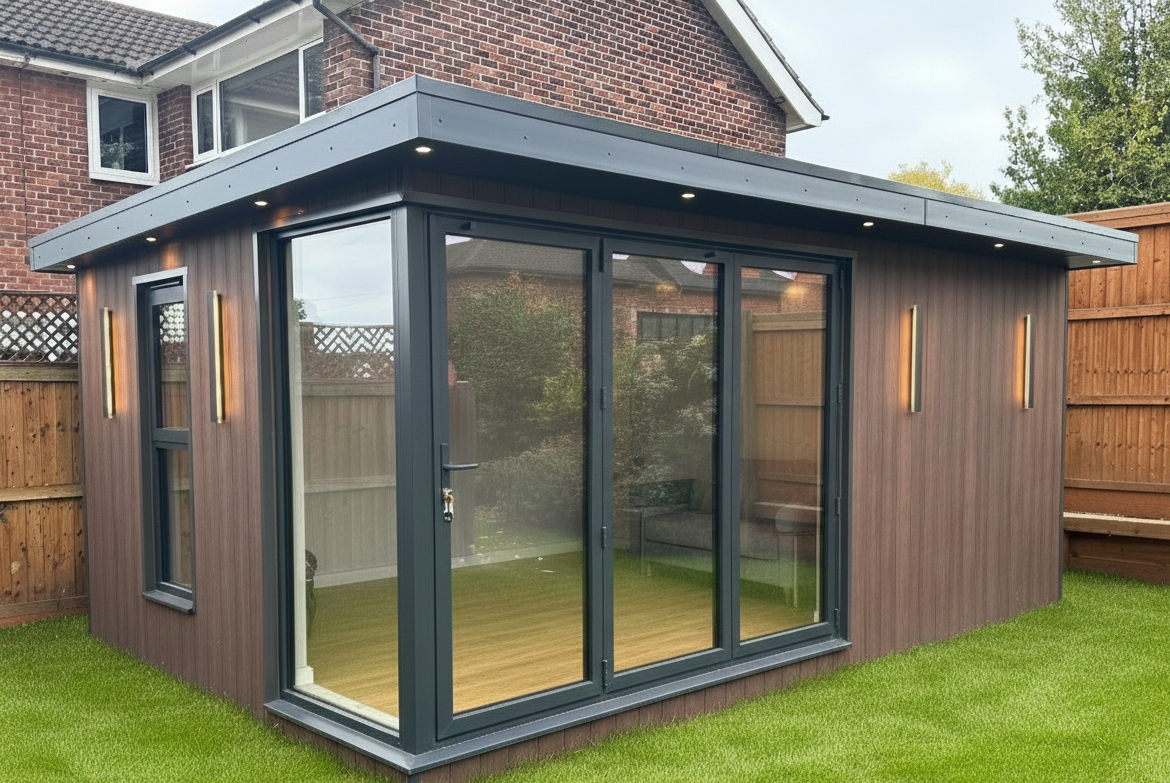
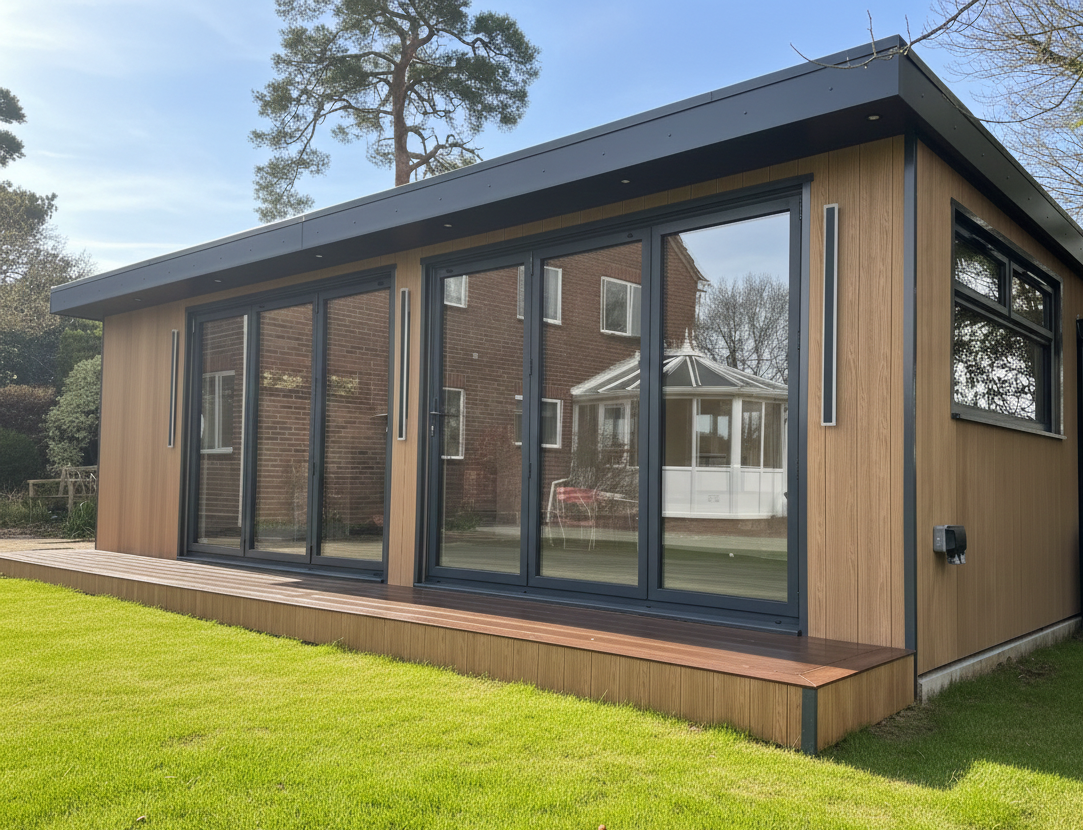
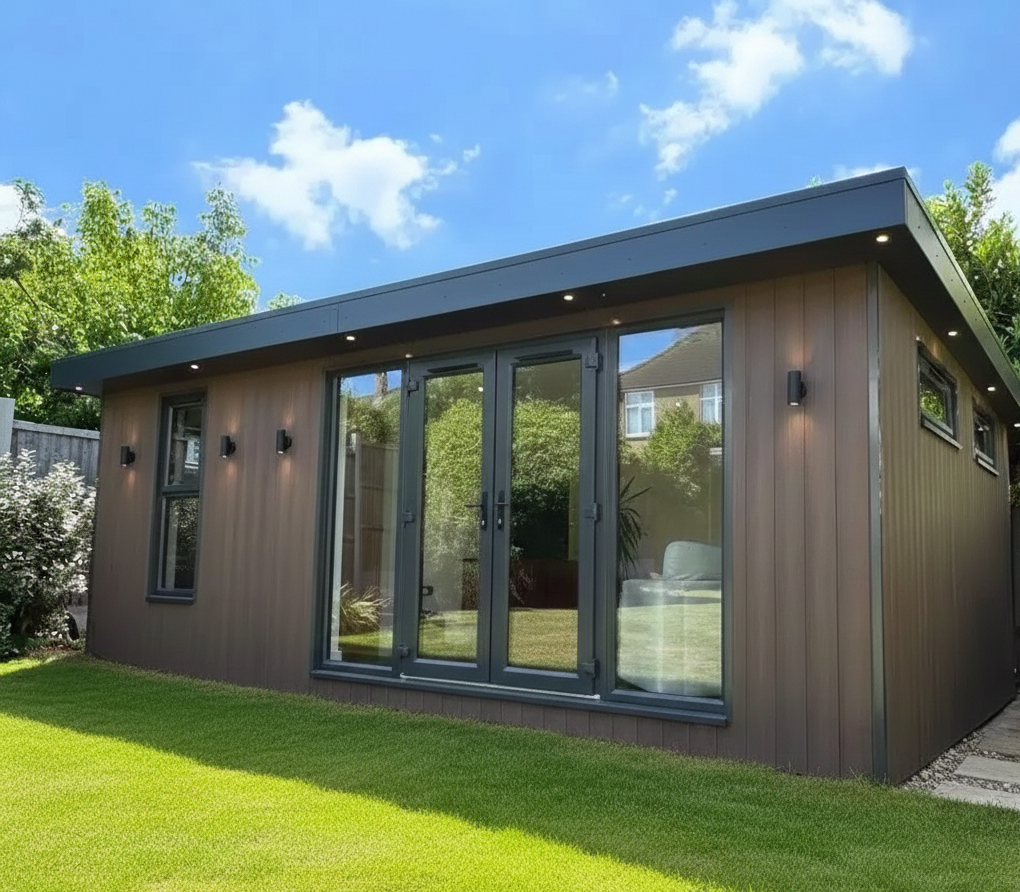
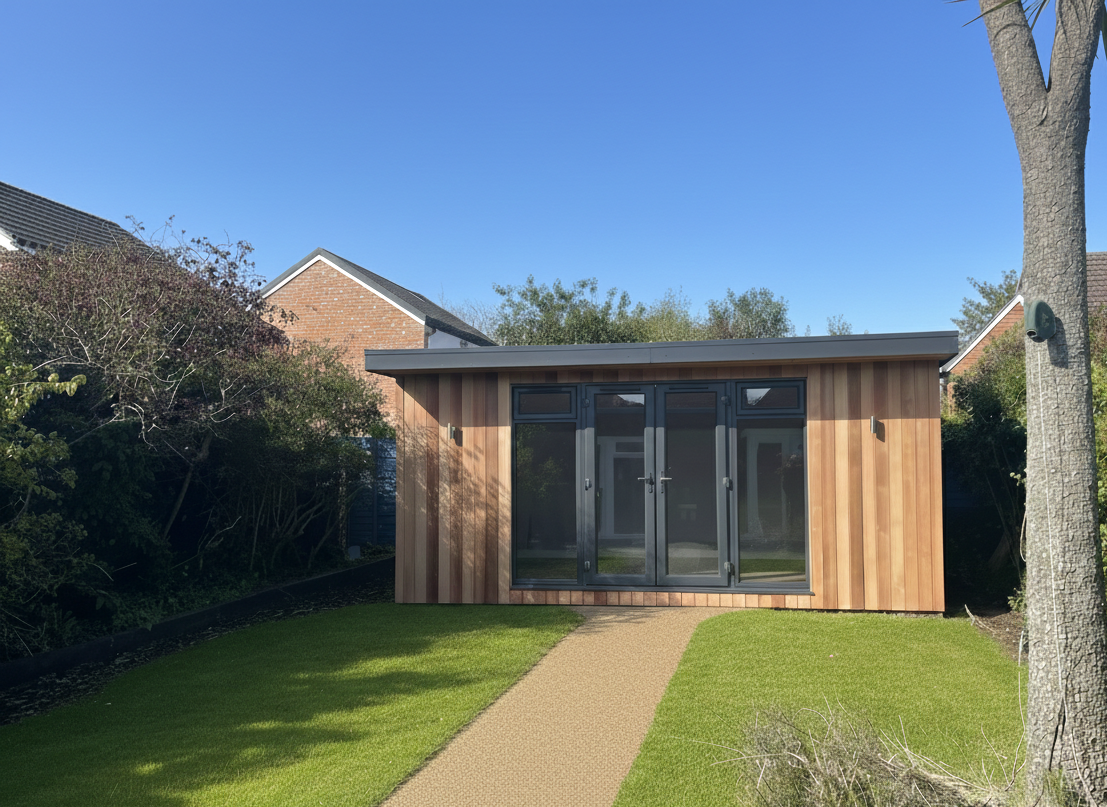
Timber cladding needs painting or staining every few years. Left untreated, it warps, cracks, and lets in moisture. Composite cladding is made from wood fibre and plastic. It looks similar to timber but requires almost no upkeep — it will not rot, split, or fade. For a building you want to last twenty years, that matters. You can explore high-end garden room options to see how composite cladding sits within a premium specification.
2. Full Insulation in Walls, Floor and Roof
This is the most important feature on the list. A fully insulated garden room works all year round. A poorly insulated one is cold from October to April and expensive to heat.
Full insulation means all three areas are covered: walls, floor, and roof. Many cheaper builds insulate the walls but ignore the floor, which sits just above cold ground. Heat also rises, so an uninsulated roof loses warmth quickly. The Energy Saving Trust has clear guidance on why roof insulation matters for heat retention, and the same logic applies to a garden room.
Ask any builder for the u-value of each element. The lower the number, the better. If they cannot answer, that is a useful signal. You can check how this is approached at a technical level in the full build specifications.
3. Flush Aluminium Doors
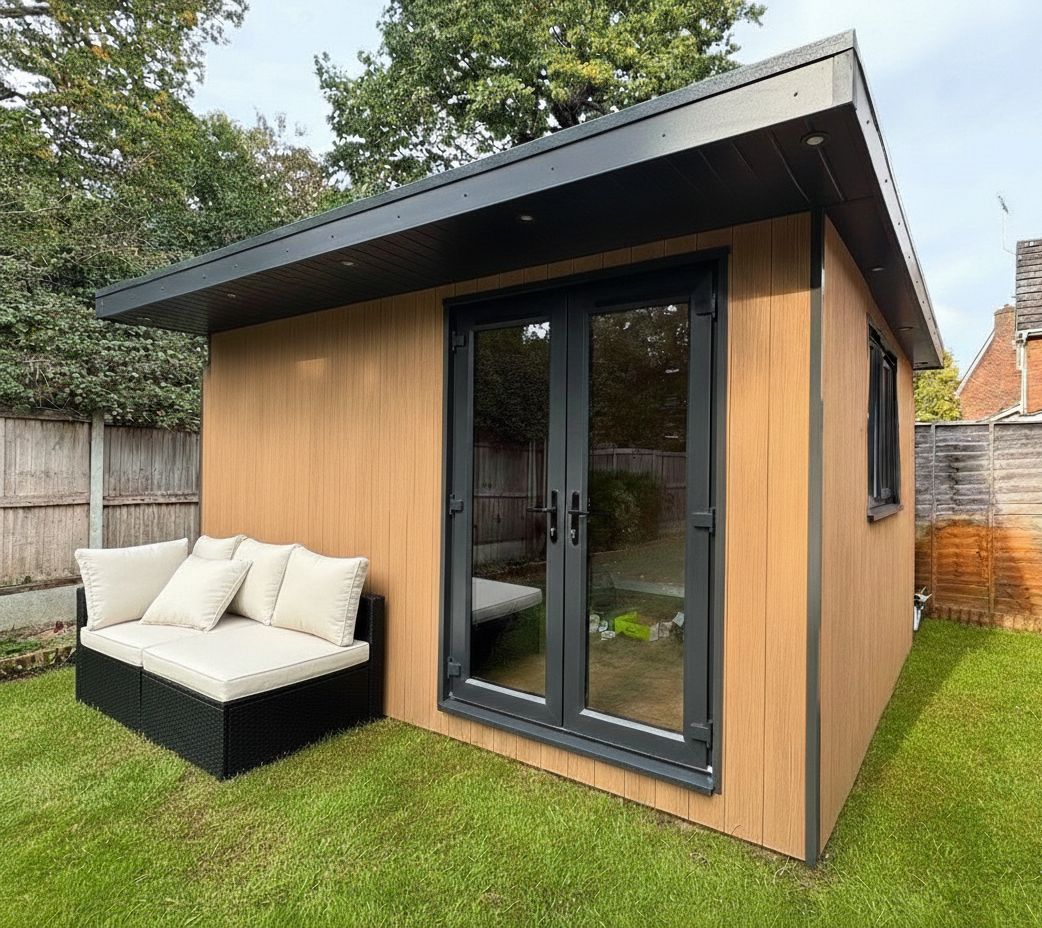
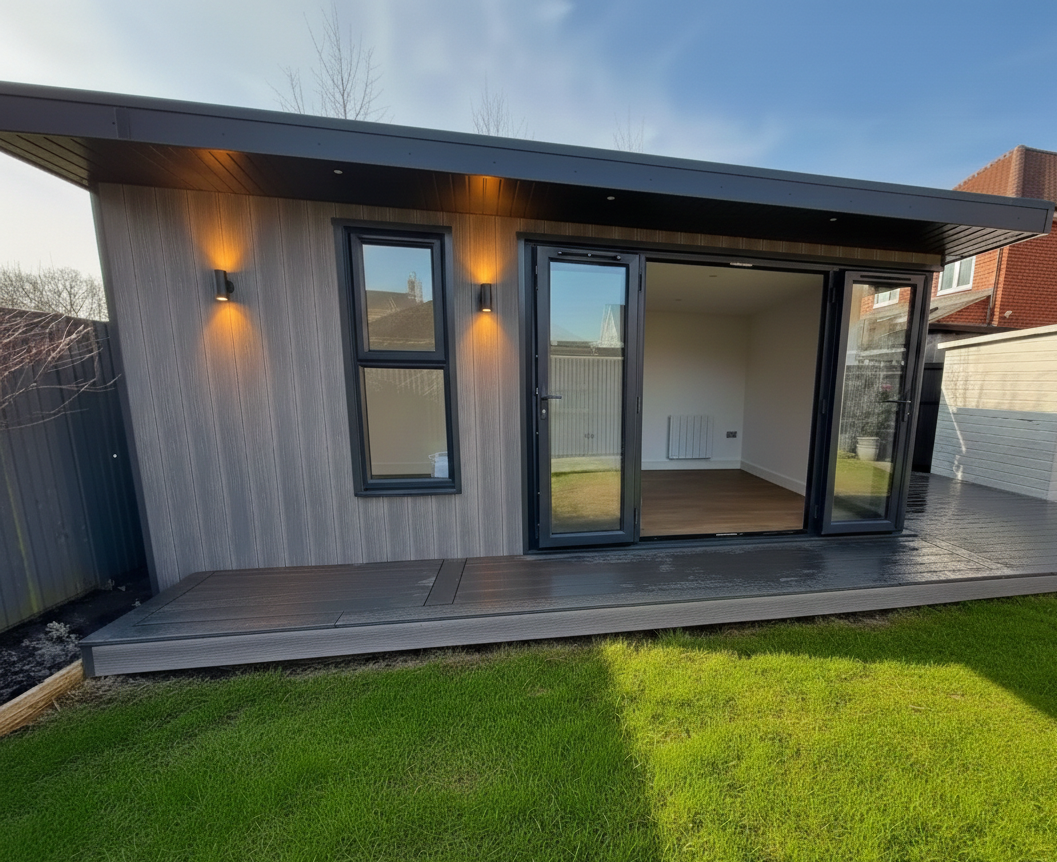
Doors set the visual tone of the whole building. A basic uPVC door can make even a good garden room look cheap. Flush aluminium doors — bi-fold, sliding, or French style — give a cleaner, more contemporary look. Aluminium holds large glass panels without needing thick frames, so you get more light and a better view. The frames do not warp with heat or moisture, and they seal tightly, which helps with both warmth and security.
4. Large Glazing Panels
The light and airy feeling that makes a garden room enjoyable comes from the glazing. Small windows give you a view but not much light. Large glazing panels fill the room with natural light and make it feel bigger than it is. Double glazing is the minimum. Triple glazing is worth considering if you will use the space as an office or year-round. Low-emissivity glass, which has a special coating, helps keep warmth in during winter and reduces glare in summer.
5. Pitched or EPDM Rubber Roof
A flat felt roof is the cheapest option and one of the most common sources of problems. Felt blisters, cracks, and can start to leak within ten years.
EPDM rubber roofing is a single-piece membrane that is far more durable. A quality installation typically lasts 25 years or more with no maintenance. A pitched roof goes further still — it adds height and character, handles rainfall better, and makes the building feel more permanent. Browse the range of pitched roof designs to see what this looks like in practice.
6. Integrated Electrics with a Dedicated Consumer Unit
A single outdoor socket and an extension lead from the house is a fire risk and unlikely to meet building regulations. A properly wired garden room has its own consumer unit — a small fuse box independent from your house — with circuit breakers protecting each circuit. The cable between house and garden room should also be buried underground, not run along the surface where it can be damaged.
7. Smart Lighting and Technology Upgrades
Smart or zoned lighting is one of the most practical upgrades in a contemporary garden room. Working in the morning calls for bright, white light. Relaxing in the evening works better with something dimmer and warmer. A single pendant gives you one option. Recessed or zoned lighting gives you many.
Other upgrades worth adding during the build — rather than retrofitting later — include wired data points for a reliable internet connection, speaker systems, underfloor heating, and external sockets. The lighting and tech upgrades page outlines what is available.
Asking the Right Questions
When comparing quotes, use these seven features as a checklist. Ask each builder what cladding they use and whether it needs maintenance, what the u-values are for walls, floor, and roof, what door and glazing systems are included, what roof covering they use and how long it lasts, and whether a dedicated consumer unit is part of the electrical package.
A builder who answers these questions with confidence and detail is worth trusting. The cheapest quote is rarely the best value. A garden room built to a proper specification costs less to maintain, stays comfortable year-round, and adds far more to your home in the long run.