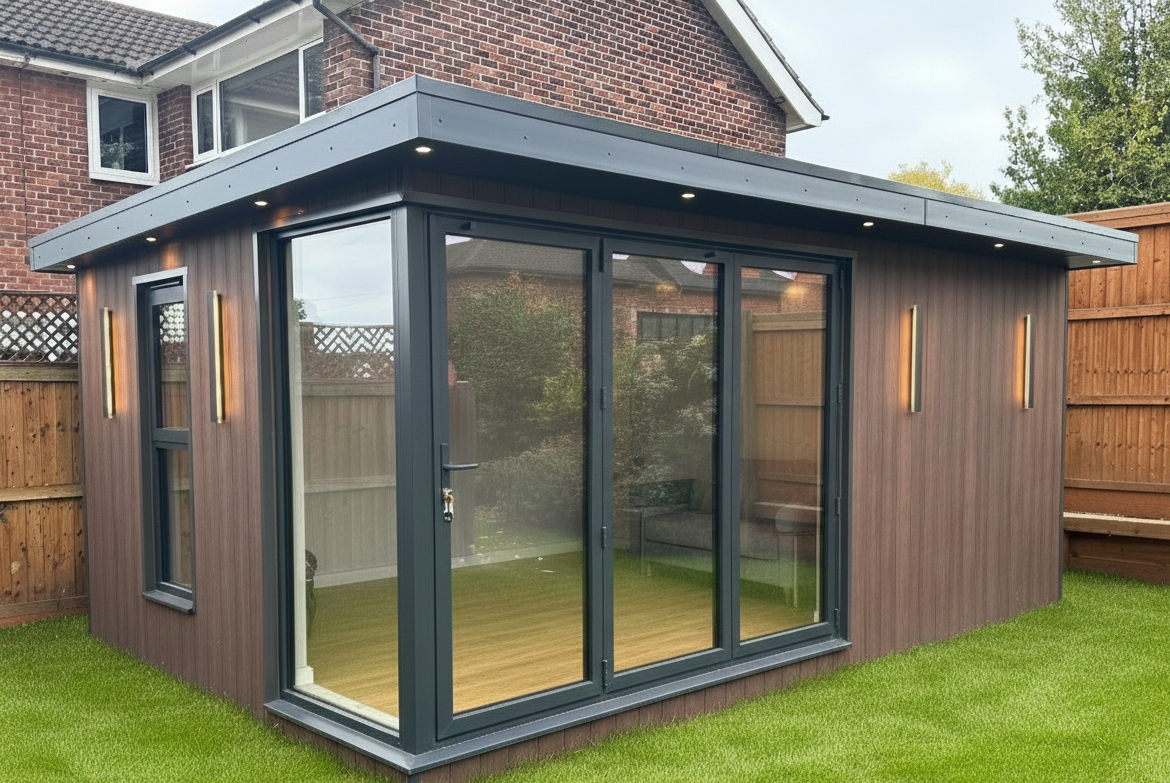
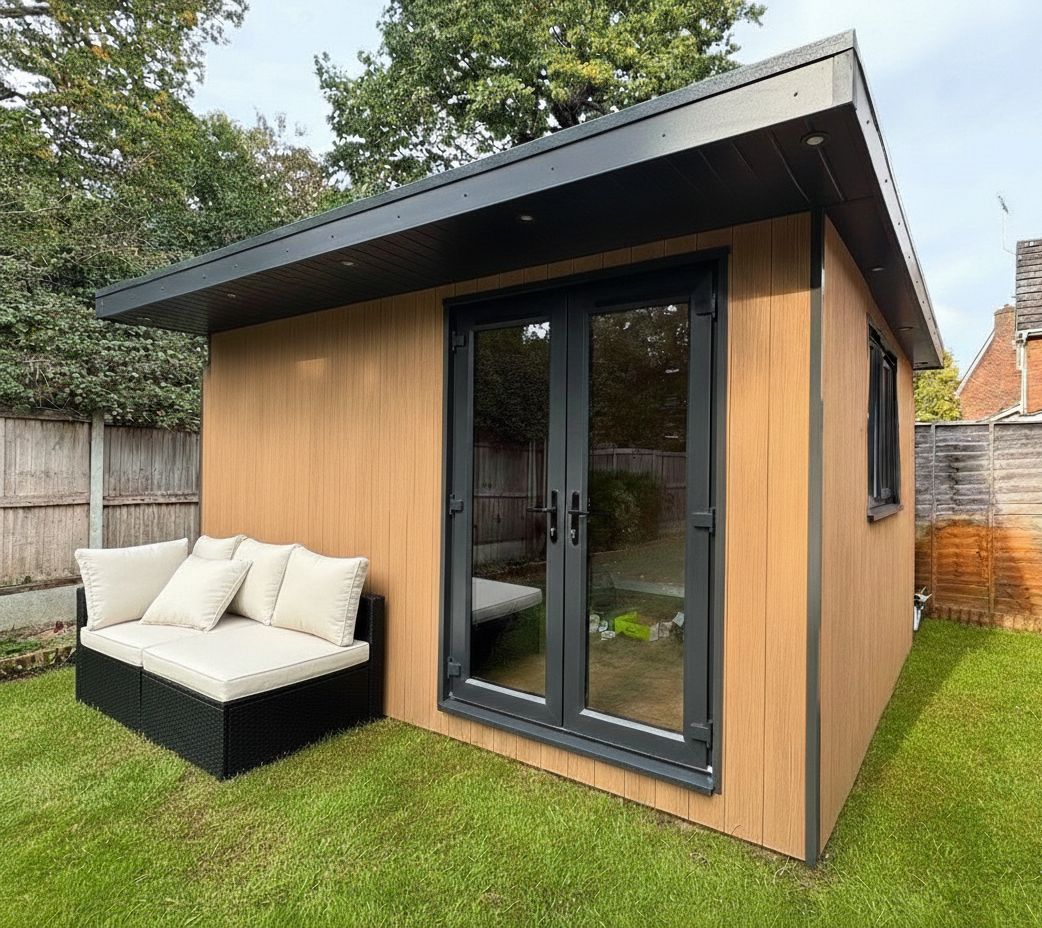
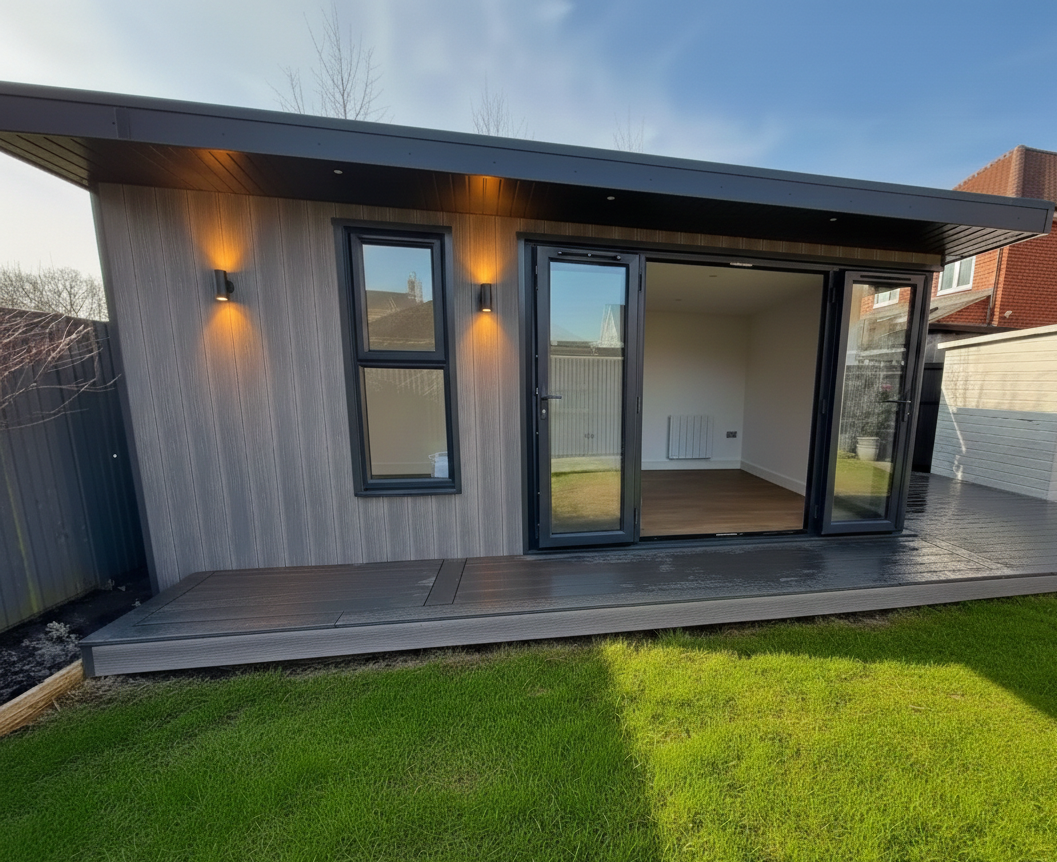
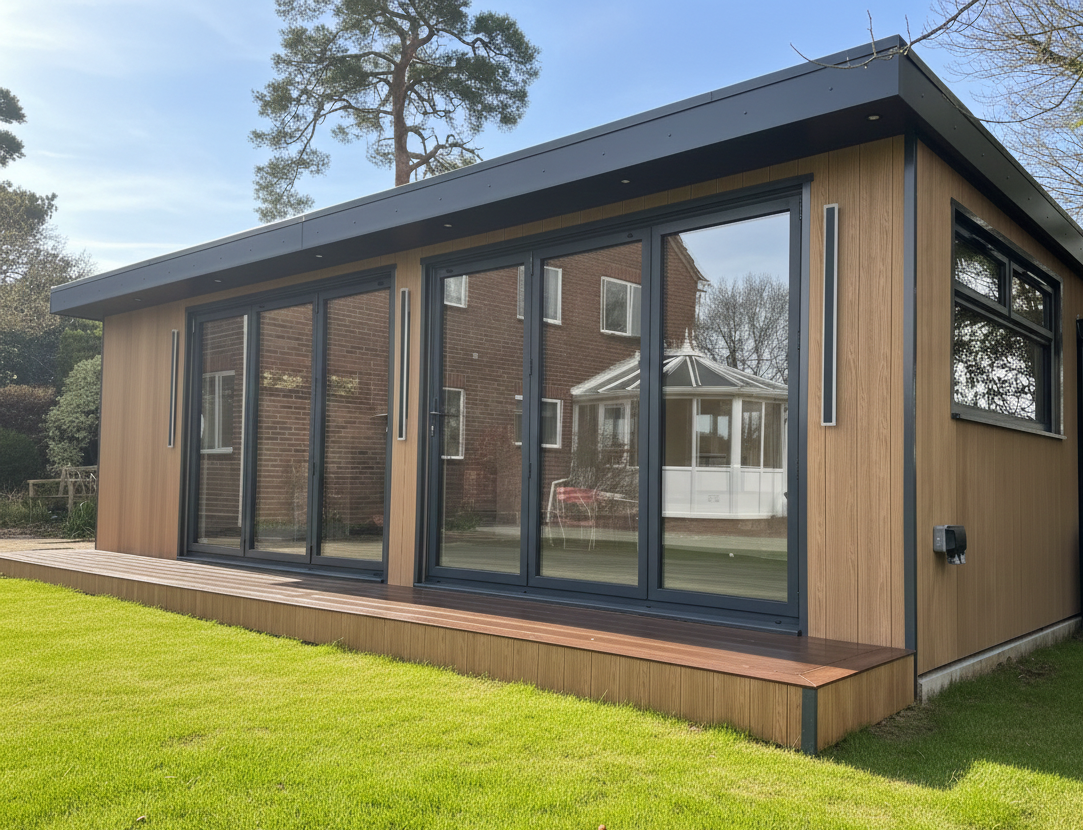
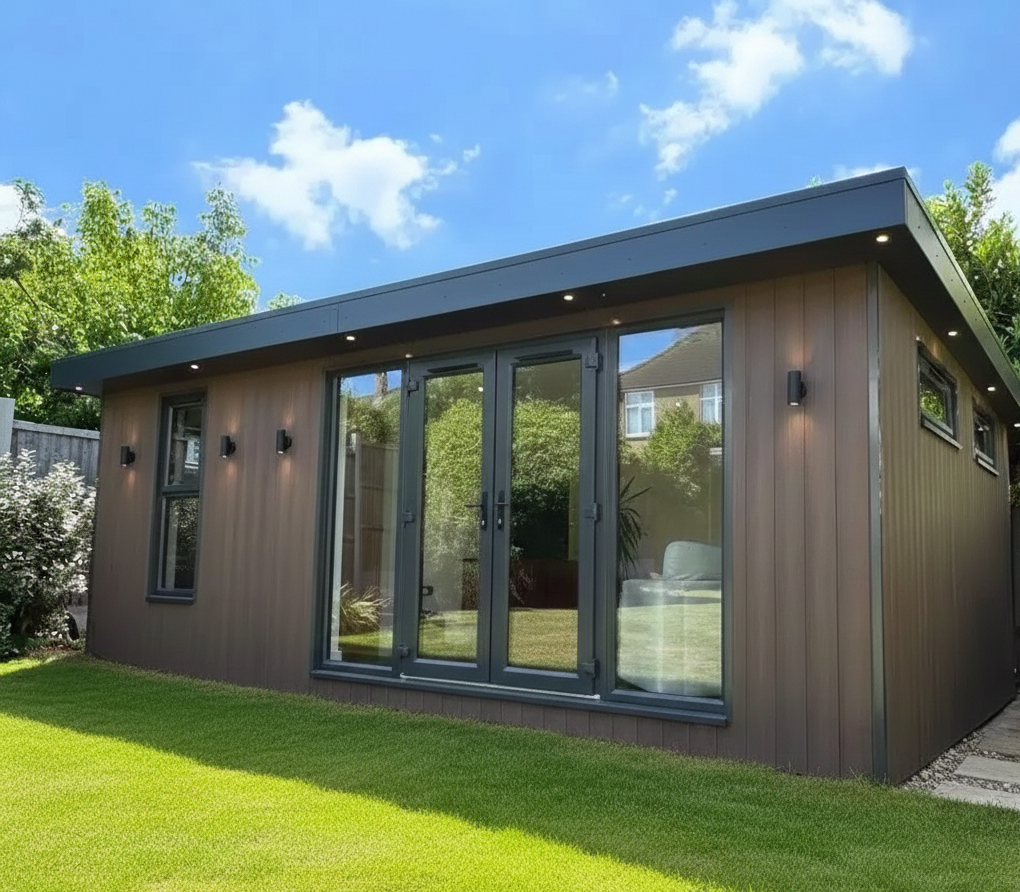
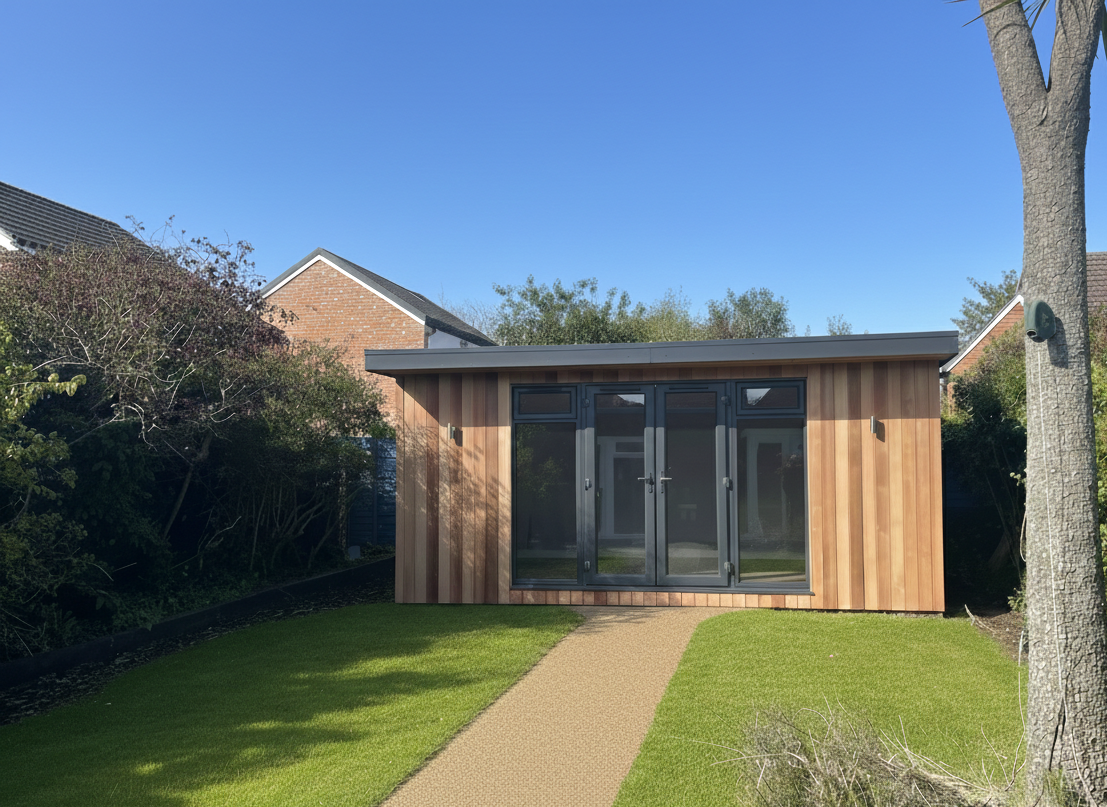
If you play an instrument or produce music, you have probably wondered whether a garden room could give you the freedom to practise without upsetting the neighbours. The good news is yes, you absolutely can create a soundproof garden room for music. With the right construction methods and materials, a garden studio can become a dedicated space where you can play drums at midnight or crank up your amplifier without anyone outside hearing a thing.
In this guide, we explain how soundproofing works, what levels of noise reduction you can expect, and what to consider when planning a music studio in your garden.
Why Standard Insulation Is Not Enough
Many people assume that a well-built, insulated garden room will automatically be soundproof. Unfortunately, that is not quite how it works.
Standard thermal insulation is designed to keep heat in and cold out. It does reduce some noise, but its main job is temperature control. Soundproofing requires different materials and construction techniques that specifically target how sound travels through walls, floors and ceilings.
Sound moves in two ways. Airborne sound includes voices and music. Impact sound comes from vibrations like footsteps or drum kicks. A truly soundproof music room needs to address both types.
How Soundproofing Works
Effective soundproofing relies on four main principles: mass, absorption, isolation and sealing gaps.
Mass means using heavy, dense materials that block sound waves. The heavier the wall, the harder it is for sound to pass through.
Absorption involves using acoustic insulation materials like mineral wool that soak up sound energy rather than letting it bounce around or escape.
Isolation means separating the inner structure from the outer structure so vibrations cannot travel directly through. This is often called a “room within a room” design.
Sealing gaps is crucial because sound will find the smallest opening. Even tiny cracks around windows and doors or electrical sockets can let noise escape.
The Room Within a Room Approach
For serious music practice, the gold standard is building a purpose-built room within a room. This involves constructing an inner shell completely separate from the outer structure. The inner walls, floor and ceiling do not touch the outer ones. Instead, they sit on isolation mounts that absorb vibrations before they can travel outward.
This approach is particularly important for loud instruments like drum kits or amplified guitars. Without proper isolation, low-frequency sounds can travel through the building and be heard outside.
A professional-grade soundproof garden room using this method can achieve noise reductions of 40 to 60 decibels, enough to make loud music practice almost inaudible from outside.
Understanding Decibel Levels
To help you find out what level of soundproofing you need, here is how common sounds compare:
| Sound Source | Typical Decibel Level |
|---|---|
| Quiet library | 30 dB |
| Normal conversation | 60 dB |
| Acoustic guitar | 70-80 dB |
| Piano | 70-85 dB |
| Electric guitar (amplified) | 80-100 dB |
| Drum kit | 90-120 dB |
The UK’s Building Regulations Approved Document E sets out requirements for sound insulation between dwellings. While these do not directly apply to garden buildings, they provide useful benchmarks. Walls between separate homes must achieve at least 45 dB of airborne sound reduction.
A drum kit at 110 dB, reduced by 50 dB through soundproofing, would sound like normal conversation from outside. That level of reduction requires specialist construction but is entirely achievable.
Key Soundproofing Features
When planning a soundproof garden room, several features make a significant difference:
Acoustic insulation in walls, floors and ceilings. High quality mineral wool designed specifically to absorb sound performs far better than standard thermal insulation.
Multiple layers rather than one thick wall. A combination of plasterboard, acoustic membrane and dense boarding creates more sound resistance than a single panel. Some builders use tongue and groove boarding combined with acoustic materials for both appearance and performance.
Acoustic glazing offers much better sound reduction than standard double glazing. Units with different thickness panes and larger air gaps block more noise. Triple glazing adds another layer of protection.
Solid core doors are essential. Hollow doors let sound straight through. Acoustic doors with seals around all edges block the gap underneath.
Sealed construction throughout. Every joint and penetration needs careful sealing around windows and doors, electrical sockets and any other openings.
Floating floors that sit on isolation pads reduce impact sound from footsteps, amplifier vibrations and drum kit bass.
What Level Do You Need?
The amount of soundproofing required depends on what you will use the room for and how close your neighbours are.
For acoustic guitar, piano or voice practice at moderate volumes, a high-quality insulated garden room with upgraded acoustic glazing and a solid door may provide enough sound reduction.
For electric guitar, keyboard with amplification, or brass instruments, you will need acoustic wall treatments and careful attention to sealing all gaps.
For drum kits, full band rehearsals or recording use, a room within a room construction is really the only way to achieve sufficient isolation. Many garden rooms offer this as an upgrade option for musicians.
Ready to get started?
Planning Your Soundproof Garden Room
Before commissioning a soundproof music studio, consider these practical points:
Location matters. Placing your wooden garden room further from boundary fences reduces the chance of any sound being noticeable, even with excellent soundproofing.
Ventilation needs thought. Soundproof rooms need fresh air, but ducts can act as pathways for sound. Acoustic ventilation systems maintain air quality without compromising isolation.
Planning permission is not usually required for garden rooms designed within permitted development rules, but check with your local authority if you are unsure about size limits.
Size considerations. A drum kit needs space around it. Recording equipment needs room. Consider not just the instruments but how you will use the space.
Whether you want a dedicated music room or a multi-purpose space that doubles as a home office or garden office for working from home, the construction principles remain the same.
Is It Worth the Investment?
A soundproof garden room costs more than a standard insulated garden building, but for musicians, the benefits are substantial. You can practise whenever suits you, play at realistic performance volumes, record without background noise, and avoid complaints from neighbours.
The wide range of soundproofing options means you can choose the level that matches your needs and budget. From basic acoustic upgrades to full purpose built studio specifications, there is a solution for every musician.
Get Started
If you are considering a garden room for music practice, the first step is understanding your requirements. Think about what instruments you play, what volume levels you need, and how close your neighbours are.
From there, a specialist builder can advise on the right level of soundproofing and create an insulated garden room that lets you focus entirely on your music.